Tuesday, May 31, 2016

Ashes (1997-2016)

Hi everyone,

Let's celebrate Ashes, the grande dame of the Connolly household in Columbus, Ohio, who passed away earlier this month. 


Comet's longtime companion was a great old cat, who always voiced her opinion and got away with whatever she wanted. 

Ashes (May 29, 2016)

Greatly missed, Ashes will always still live here at Melissa's Kitties.

Saturday, May 28, 2016

Prince

Like no one else, Prince made me dance. I first saw him on MTV, of course, where his music videos played on regular rotation. Then, when his movie Purple Rain came out in '84, with that amazing Oscar-winning soundtrack, he was everywhere and everything.

"Let's Go Crazy" Prince and the Revolution (1985)

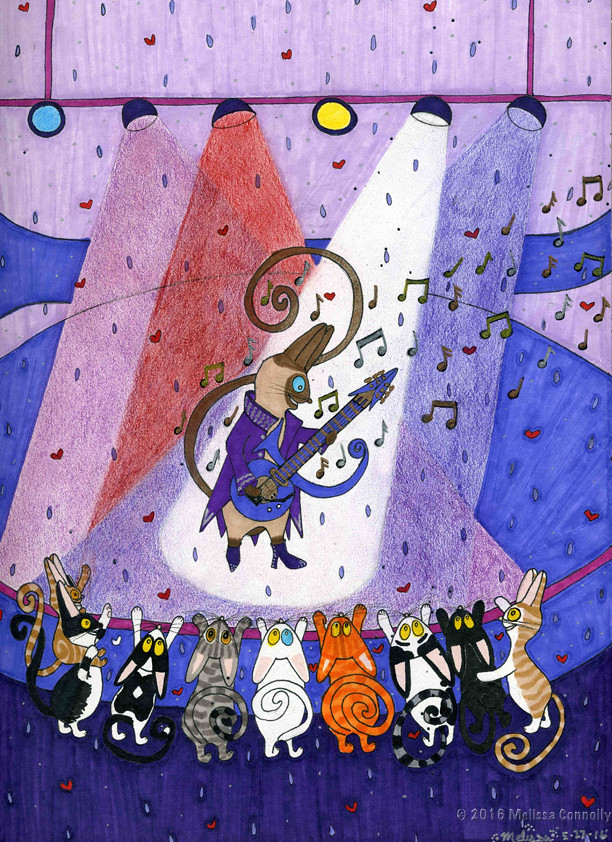
Prince was a consummate musician. Whenever he played his guitar, I was transfixed. He was an explosive performer who demanded our attention without having to ask for it. 

I always loved Prince's air of mystery, which happily seems true – that he built and lived in his own Paisley Park in Minnesota rather than New York or L.A., that he spoke in one-liners or had others speak for him, and that he popped up unannounced with surprise performances for a lucky few in the wee hours of the night. 

Prince has a sound, style, and coolness that will always only be his. Who else can pull off those outfits and heels, let alone dance in them the way he did? Who else can pick out a color and own it? We're so lucky that he shared his purple world with us.

I think President Obama put it best: Few artists have influenced the sound and trajectory of popular music more distinctly, or touched quite so many people with their talent. As one of the most gifted and prolific musicians of our time, Prince did it all – Funk, R&B, Rock and Roll. He was a virtuoso instrumentalist, a brilliant bandleader, and an electrifying performer. "A strong spirit transcends rules," Prince once said – and nobody's spirit was stronger, bolder, or more creative.  

May his purple reign live on.... 

Prince (May 27, 2016)
(Illustration Friday: April 22, 2016)

Friday, May 13, 2016

Wood

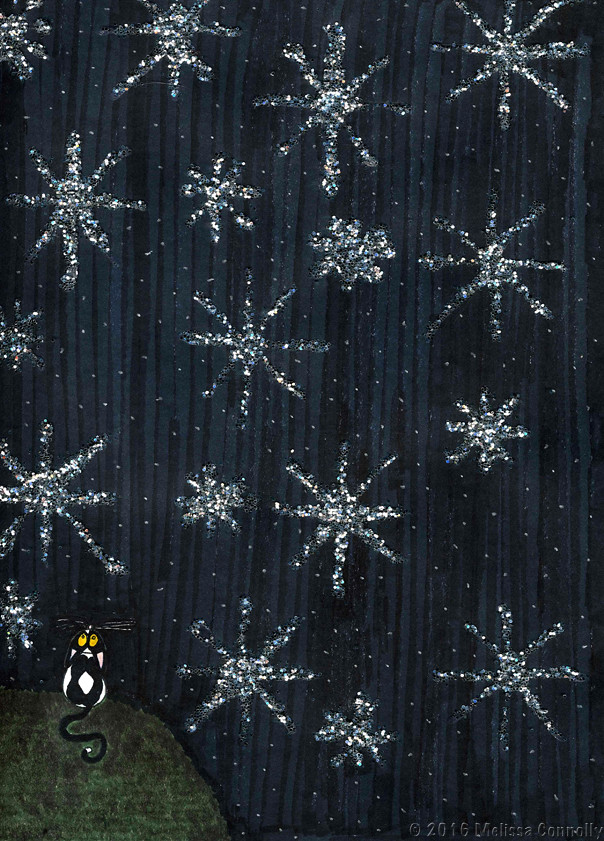
Lately, I've been thinking about how Lily's world is the confines of my small apartment. Who knows what happened during the first seven months of her life, but since then, she's only rarely stepped out of our front door into the main hallway.

Sometimes, I wonder if she'd like to move into a more spacious place with more windows and scenery. Or, maybe she'd like to sharpen her claws on a giant tree instead of my furniture. When I suggest these things to her, though, she just stares at me and licks her foot.

Wood (May 2, 2016)
(Illustration Friday: April 15, 2016)


Monday, May 09, 2016

Tool

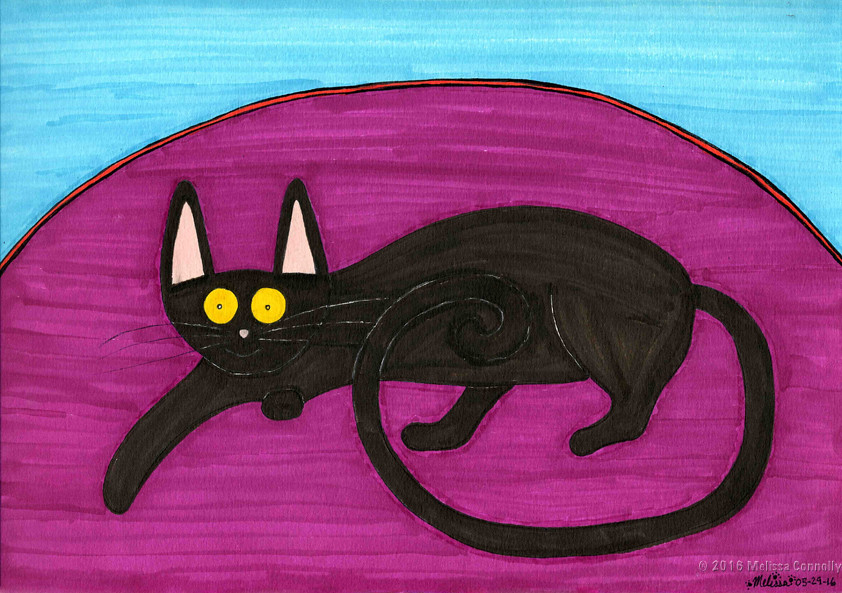
Norman always finds ways to get a meal.

Tool (April 28, 2016)
(Illustration Friday: April 8, 2016)

Saturday, April 23, 2016

Unfaithful Music & Disappearing Ink

Hi everyone,

When I saw last year that Elvis Costello was on a book tour in support his new memoir Unfaithful Music & Disappearing Ink, I bought my ticket for his D.C. stop immediately. I can't claim to be his biggest fan, but I love some of his music, and I always find him entertaining. Elvis Costello first got my attention in 1989 when he released Spike, an album that includes some songs co-written with Paul McCartney. One of its singles, "Veronica," became a big hit on the radio and MTV, which I thought was impressive considering it's a happy tune about someone with Alzheimer's disease. My other favorite song on Spike is called "Tramp the Dirt Down," an unfriendly commentary on Margaret Thatcher. I guess I was that kind of kid.

I saw Elvis Costello perform a live set once in person, when he opened for Sting, but I mostly catch him randomly on TV. I remember when he showed up on "Frasier" in the '90s, playing a musician who just got hired to perform daily at Cafe Nervosa, ruining the Crane Brothers' peaceful coffee-shop hangout. And, I tuned in that night in 2003 when he filled in for David Letterman as host of "The Late Show." (Why do I remember these things?) Also, over the years, Elvis Costello showed up on Comedy Central's "The Colbert Report," always game to do something fun.

My favorite thing that Elvis Costello has ever done, though, is "Spectacle," a music-filled talk show, which he hosted. He interviewed musicians and other famous faces about music and performed related songs with his guests. The show aired from 2008 to 2010, but I didn't see it until last year when I finally got around to renting the DVDs through Netflix. Elvis Costello is so knowledgeable about music, having played with so many different musicians of different genres. Through this show, I learned about artists I love as well as ones I'd never heard of before. This show was a perfect combination of friendly, informative conversation and wonderful performances in a relaxed setting in front of a small audience. It should still be on the air and required viewing in schools!

But I'll get off that soapbox and sum up my admiration for Elvis Costello by saying this: with his fantastic songwriting abilities already established – Listen to "Alison," "Beyond Belief," "God Give Me Strength" or the rowdier "Pump It Up" and "Oliver's Army," just to name a few. – Elvis Costello always tells interesting stories, whether he's singing or talking. So, I had a good feeling about him writing a book. When I picked this book up at Sixth & I Synagogue last October and realized that it was 672 pages, I may have questioned my logic a bit, but I still kept the faith.

Before the author even appeared on stage, I noticed that Unfaithful Music & Disappearing Ink includes no index, and the photos are sprinkled throughout the text without any captions. The first thing Elvis Costello said to us about the book was that we might notice it includes no index and the photos aren't captioned or stuck in the middle on a cluster of special paper. He explained, "I'm telling a story. If you read the book, you'll know who that person is in the picture." I couldn't wait to get started.

This book is great! It reads really fast because, as we know, Elvis Costello weaves good tales. It was an interesting read because, since I'm not overly familiar with his vast body of work, I rolled right past the specific details and lyrics about various unfamiliar songs that I'm sure his superfans would study more fiercely. After reading the book, I learned that a companion CD exists, which probably includes many of the songs the author refers to in his story. I wish I had known about this helpful resource while I was reading.

I favored learning about Declan MacManus before he became Elvis Costello – the boy who went to work with his dad (Ross MacManus, a popular singer and musician in his own day), hanging around in the back rows of dance halls, watching him and the other musicians rehearse, fostering his growing love for music. This book covers a good amount of family history with wonderful details about his grand and great-grand relatives as well as his own upbringing. It was exciting to following his determined move from office jobs to rock-and-roller. Feeling the passion and drive he had to share his craft is inspiring.

I've known about Elvis Costello's rise on the new wave/punk music scene and his early reputation as an angry young man, but the one I've come to know better is the Elvis Costello of now – the proper British gentleman, who always wears a suit and hat and is quick to joke, explain music history, and play with varied musicians, like Emmylou Harris and Mavis Staples. For me, his exploits with his old bandmates, The Attractions, at the height of their fame are more side notes to the richer life he's led, learning and honing his musicianship – always moving forward to the next thing, sticking by his family, and eventually finding his own personal contentment.

In the book's acknowledgements, Elvis Costello thanks his wife, jazz musician Diana Krall, for making him take the time to write everything down for this memoir so that he and the family will have it. That's what this book reads like: a personal keepsake for future generations of the MacManus Clan to remember not only his extraordinary life, but also the lives of those distant working-class relatives who have already passed. The old black-and-white photos complement this effort, capturing the author at all ages as well as relatives, friends, scribbled song lyrics, and other mementos.

Unlike a typical memoir, this one is not a chronological life story. It's more like a box of memories. Chapters about Elvis Costello's parents and grandparents run alongside chapters about working with Paul McCartney, T Bone Burnett, Burt Bacharach, and Allen Toussaint. Within those, he recalls his encounters with Bob Dylan, David Bowie, Johnny Cash, Joe Strummer, and even classic film director Frank Capra. You never know who or what he'll run into on the next page. Elvis Costello will keep you reading to find out.

Saturday, April 09, 2016

Johnny Kitties: Celebrating Johnny Depp Film #50. Black Mass (2015)

[What is Johnny Kitties? See Johnny Kitties: Celebrating Johnny Depp for all the details. Visit the Johnny Kitties page for a full list of Johnny Depp's filmography and links to all previous Johnny Kitties blog posts.]

James Bulger, I was always fascinated by – not just where he came from, how he lived, and all that. But being able to evade authorities for a good 16, 17 years, few have done that. So, I was always fascinated with the story....I feel like it's an important film. It's not just random entertainment.
– Johnny Depp on Black Mass

Who is this bad guy? 
Black Mass tells the true story of James "Whitey" Bulger (Johnny Depp), the infamous criminal from South Boston who became an FBI informant to help take down an Italian mafia family. Based on the book Black Mass: Whitey Bulger, the FBI, and a Devil's Deal by Dick Lehr and Gerard O'Neill, this gritty crime thriller directed by Scott Cooper, costars Joel Edgerton, Benedict Cumberbatch, and some other familiar faces. 

If he's in it, I will go. 
I was excited to see Black Mass for two reasons: 1) Johnny was playing a real person in a serious drama and 2) the story takes place in Boston, which usually makes me nostalgic and homesick. But when I heard that Johnny might pull out of starring in the movie due to some contracting issues, I was partially hoping it would happen because seeing a movie about a violent, angry gangster is not my idea of a good time. 

I had horrible allergies on the day I saw Black Mass during opening weekend. The air-conditioned theater made them go away, but then I turned into a ball of stress. Johnny has played serial killers and other gangsters before, and I usually end up kind of rooting for them by the end of the movie. I have trouble finding any redeeming qualities in Whitey Bulger. I left the theater wondering what Kitties I could get out of Black Mass.

What happened?
Above: Johnny
Below: the real Whitey Bulger
Black Mass is a well directed, well told, interesting story. Also, as Jimmy Kimmel told Johnny, "There's a lot of great acting in this movie...But you're the best one." Those who worked with Johnny on the film agree: "A lot of the crew were from South Boston and many of them knew Whitey," director Scott Cooper explains. "They said it was like a ghost came back." 

All the press I inevitably saw about Black Mass was repetitive: Finally, Johnny was taking a break from Disney, his elaborate costumes, and outlandish characters and returning to his roots, doing some "real acting acting." It's true that I shared similar excitement about him working on a true story, but that general opinion in the press (which I assume is due to their overall distaste for Captain Jack Sparrow) is wrong. Does all the makeup and lack of hair, piled on to look exactly like Whitey Bulger, not count as a crazy costume? It seems to me that playing someone like "The Mad Hatter" or "Sweeney Todd" is hard, if not harder, than playing this gangster. From my perspective, the hardest thing about playing Whitey Bulger is probably his bad attitude. Who wants to be in that guy's head? 

What's to like?
I agree with Jimmy Kimmel that Johnny is "the best one" in this movie, but it doesn't surprise me. I've always said that Johnny is really great at playing mean and angry. In this role, he is menacing all the time. Since the real Whitey Bulger didn't like the book on which this film is based, he declined to meet with anyone involved with the project. Instead of getting direct access to his subject, Johnny built this character by watching FBI surveillance tapes, looking through photographs, and interviewing Bulger's family members and associates. As usual, the extensive research paid off. Joel Edgerton observed, "Johnny is already a mysterious character. He has a certain rock-star aura about him. I'd see him roll up to work in the morning and walk to makeup, and then I'd spend all my time with what felt like a different person. You sort of forget what he really looks like. By the end of filming, I'd spent more time with Whitey Bulger than I'd spent with Johnny."  

For the character, Johnny captured a stillness that kept everyone guessing. "The thing about him, my character, was that he, I think, was most effective, most frightening, when he got very quiet," Johnny explains. "He was always very still," Scott Cooper adds. "Johnny and I talked about that a lot – Whitey's ability to strike when people were least expecting it." 

I watched Black Mass, fearing that Whitey would kill whomever he was talking to at any moment, and sometimes he did. Black Mass has some violent scenes that I wish weren't in it – some things are better left to the imagination, in my opinion. But the violence has purpose, Johnny notes; violence was like another language for Whitey Bulger and his gang. Pairing that notion with Scott Cooper's directing style, the audience experiences everything as it happens. As a fan of Scott Cooper's 2009 Oscar-winning film Crazy Heart, about an alcoholic country singer, Johnny was excited to work the director. If you saw that movie, you've seen the dark, scary, nauseating side of alcoholism, and Scott Cooper uses that same in-your-face view for Whitey Bulger's violent, criminal activities in Black Mass
   
I got overly excited when Kevin Bacon – a familiar face – showed up in the middle of this movie. With Johnny looking nothing like himself and every situation in this film feeling treacherous, I was pleased to find these other actors who I recognized: aside from Kevin Bacon and Benedict Cumberbatch, Peter Sarsgaard, Adam Scott, and Cory Stoll are in this great cast too. 

I also like how the story is revealed in Black Mass. The Bulger family seems like any other, but the brothers steered their lives in different directions – Whitey remained a lifelong criminal while his brother Billy (Benedict Cumberbatch) became a prominent politician. Because FBI agent John Connolly (Joel Edgerton) was one of Whitey Bulger's childhood friends, he was able to convince him to become an agency informant. Throughout the film, everyone involved – good and bad – becomes more entrenched in Whitey Bulger's world. As each of his associates are caught and arrested, his criminal activities are confirmed during their interrogations. After being on the run for 16 years, Whitey Bulger was arrested in Santa Monica, California, in 2011. Eventually, he was sentenced to two life terms plus five years in prison for 19 murders, among several other charges. 

All kitties should stay away from Whitey Bulger.
It was slim pickings to find a scene for The Kitties in Black Mass. My favorite scene is between Whitey Bulger and John Connolly's wife Marianne, played by Julianne Nicholson. Knowing that Whitey and his lot are up to no good, she argues with her husband about socializing with them in their home. In protest, she decides to spend the evening in her bedroom. When Whitey Bulger learns where she disappeared to, he heads upstairs and has a veiled threatening conversation with her. I'm a sucker for good acting. I started to draw this but then realized it's still not very Kitty appropriate. 

Instead, I chose the scene below, where Whitey Bulger (Gordon) realizes that his time in Boston is up when The Boston Globe breaks the story about his dealings with the FBI. (I'm not sure how Mini and B.J. made their way into this scene's props. They are sneaky.) 

Johnny Kitties: Celebrating Johnny Depp Film #50. Black Mass (2015) [March 27, 2016]

Johnny keeps busy. 
Last year, Johnny tackled another horrible character, Donald Trump, in an 50-minute spoof that was posted on Funny Or Die in February. Donald Trump's The Art of the Deal: The Movie is a parody of the making of a TV movie about how this guy made it big at whatever it is he does. Shot last December, this film costars Johnny's friends Alfred Molina and Stephen Merchant, among others, along with a slew of other famous faces making cameos, including Henry Winkler, Christopher Lloyd, Jack McBrayer, and Ron Howard. You can see the trailer and other clips here, but the full film is no longer available on the Funny or Die website. Funny or Die, if you're only going to post something this monumental on your website for a limited time, let the world know your schedule. I missed seeing the full film because I waited a few weeks before trying to find it. 

In the end, as much as I love Johnny, I think it's a good thing that I only found a few clips and scenes from this four-day secret filming effort. I have no tolerance for The Donald. (This does not mean I don't want access to see the whole thing, Funny or Die! I am waiting...)  

Johnny also officially went rock star this year. He formed the Hollywood Vampires with friends Alice Cooper and Aerosmith's Joe Perry. The band released an album last September comprised of covers and original songs, and has been doing lots of press since then. The album offers a bunch of impressive guest performers, including Paul McCartney, Dave Grohl, Joe Walsh, and Christopher Lee. The Hollywood Vampires performed a tribute to Motorhead's lead singer Lemmy during this year's Grammy Awards telecast and are currently on a worldwide tour. 

What's next? 
"The Mad Hatter" returns in Alice Through the Looking Glass, which will hit U.S. theaters on May 26. In late March, Johnny and director James Bobin did a live half-hour Q&A session on Facebook to promote this film. See you at the theater! A Johnny Kitties tribute for Alice Through the Looking Glass will follow its DVD release. 

Photo credits: All Black Mass photos © Warner Brothers Pictures; Johnny as Donald Trump courtesy of Funny or Die; Holllywood Vampires photo courtesy of Hollywood Vampires Twitter account  

Wednesday, April 06, 2016

Wednesday, March 30, 2016

Wisdom

When The Mother Kitty speaks, everybody listens.

Wisdom (March 30, 2016)
(Illustration Friday: March 25, 2016)


Sunday, March 20, 2016

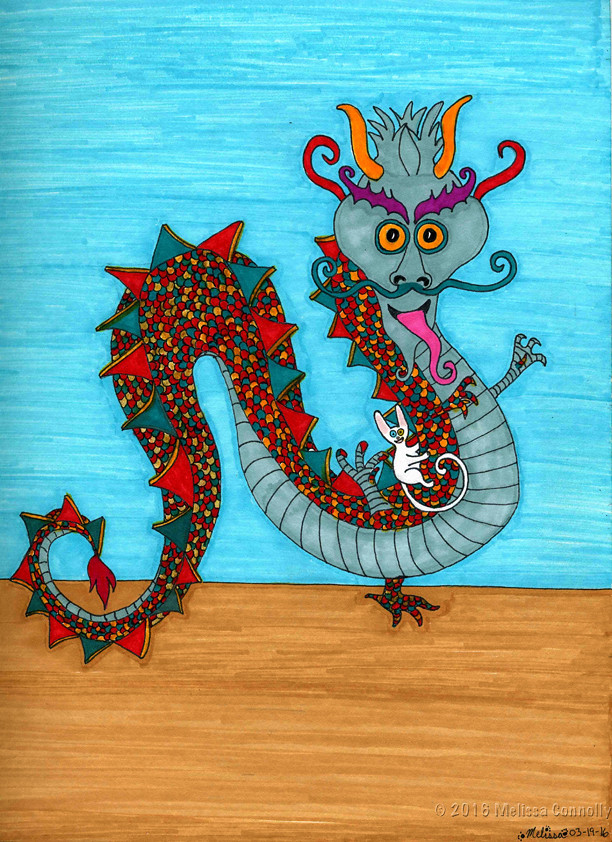
Dragon

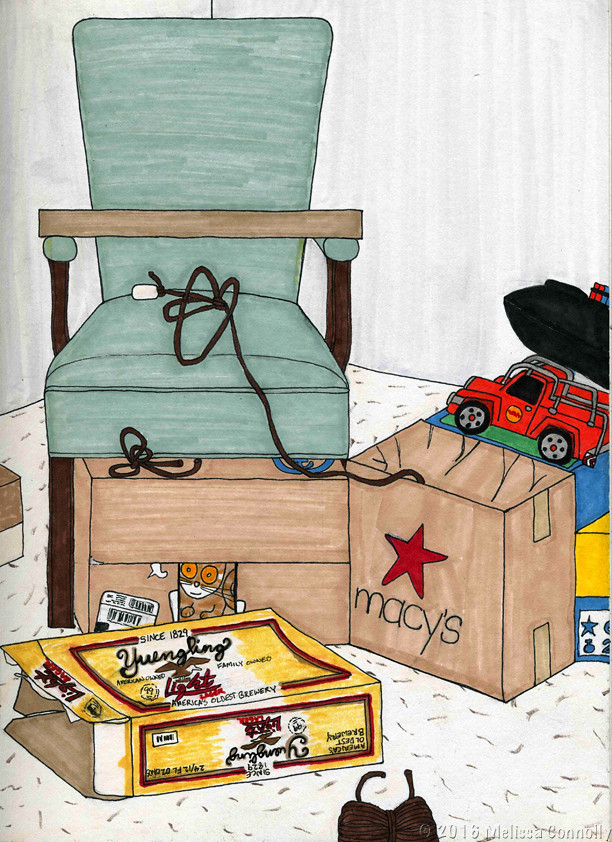
Long before she came to live with us, The Mother Kitty had a pet.

Dragon (March 19, 2016)
(Illustration Friday: March 11, 2016)


Wednesday, March 16, 2016

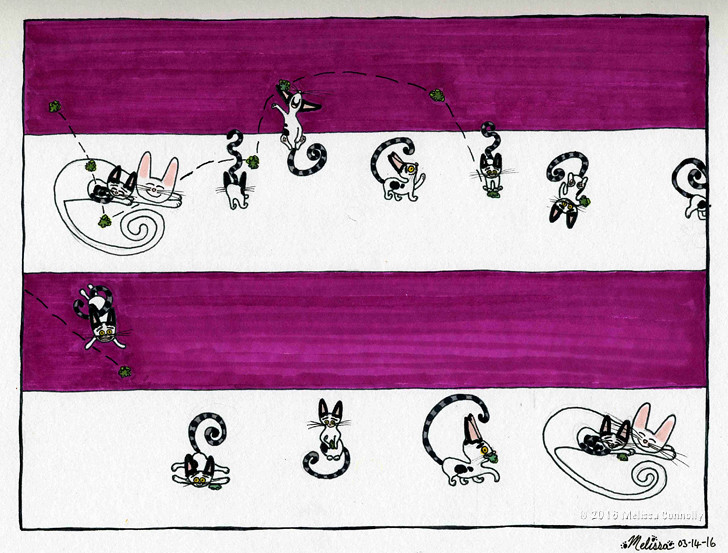
Childhood

Gordon didn't worry about much when he was a kid.
Childhood (March 14, 2016)
(Illustration Friday: March 4, 2015)

Monday, March 14, 2016

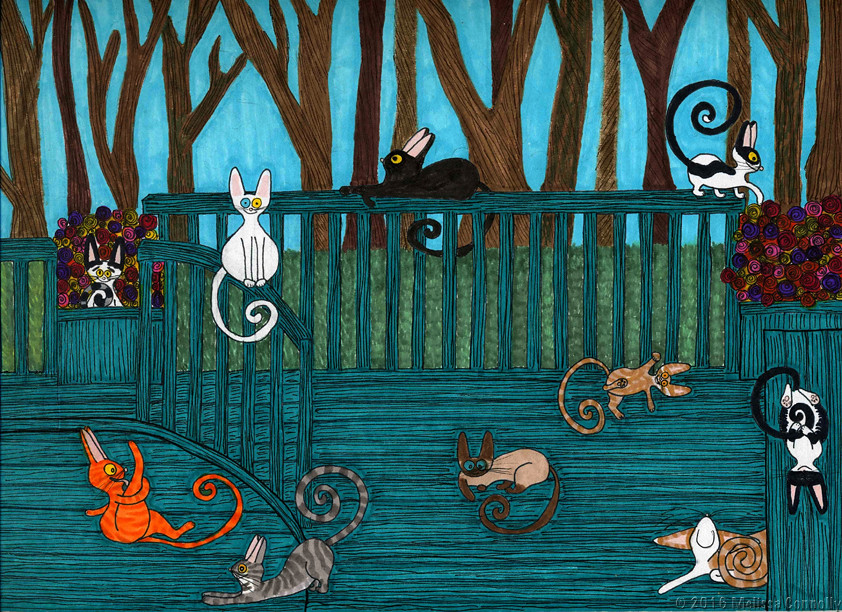
Village

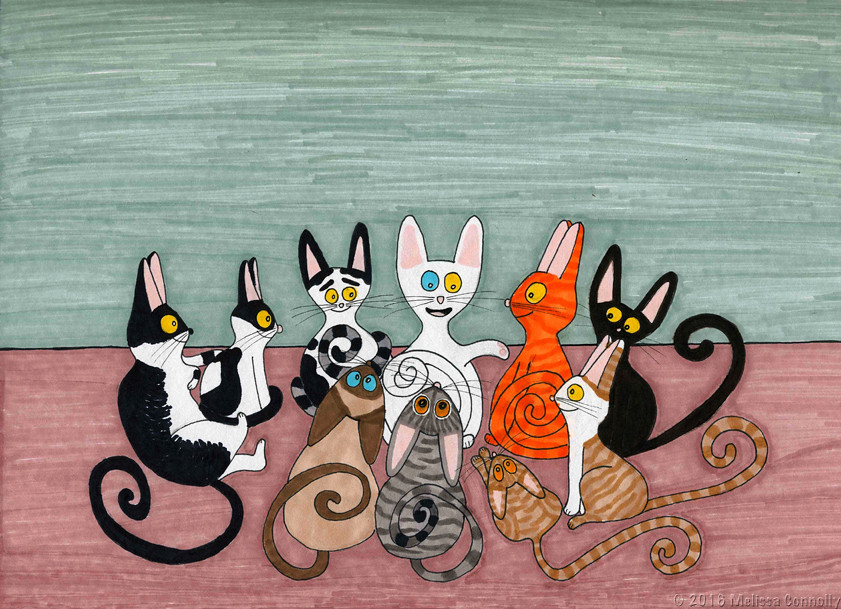
Some people think that The Kitties live together at my parents' house. The truth is that only four have lived there (and not all at the same time). The full village of Kitties only ever comes together in my head. I'm certain, though, that they would love to share a leisurely day on Mom and Dad's back porch.

Village (March 12, 2016)
(Illustration Friday: February 26, 2016)

Thursday, March 10, 2016

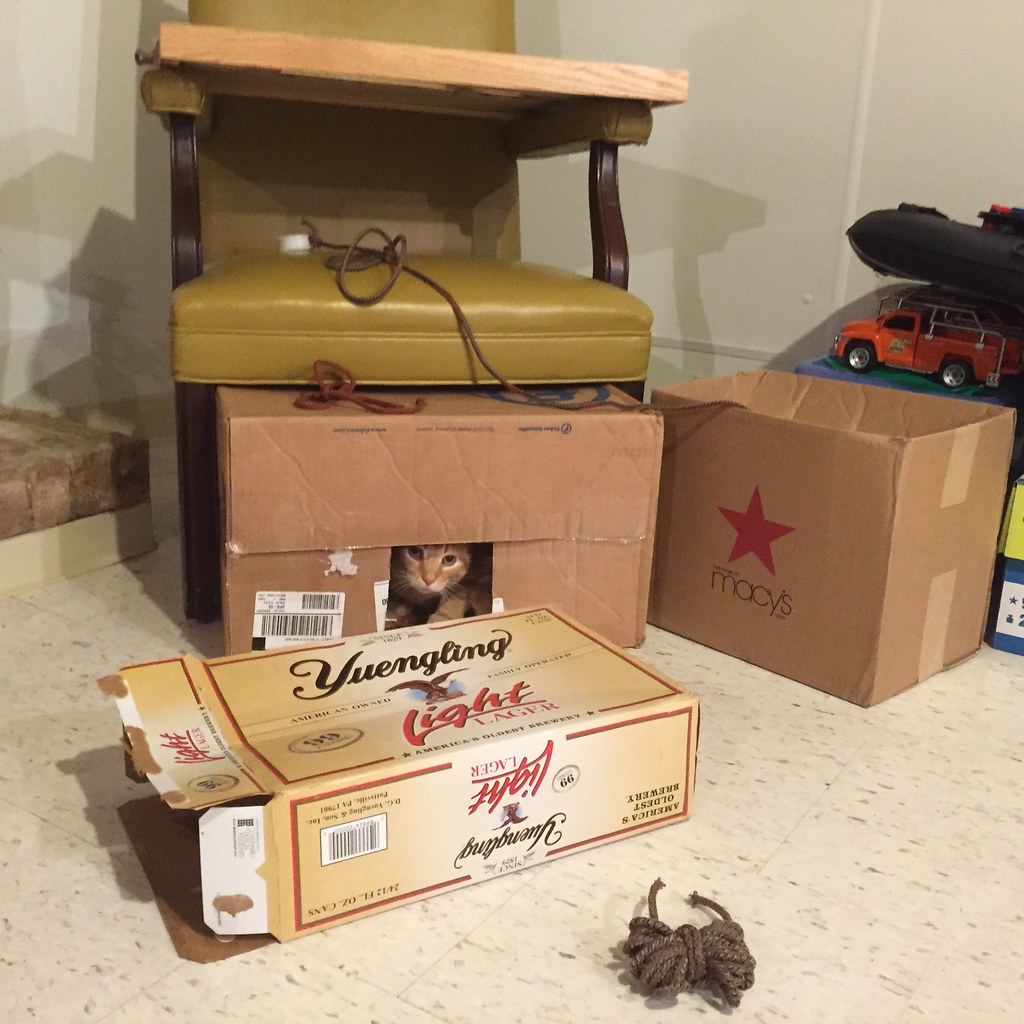
Shelter

Tyrone has an apartment in my parents' basement. He has everything he needs down there.

Tyrone
Where's the Kitty?
Shelter (March 9, 2016)
(Illustration Friday: February 19, 2016)


Monday, March 07, 2016

Hat

On really cold days, The Mother Kitty knows what to do.

Hat (March 3, 2016)
(Illustration Friday: February 12, 2016)

Thursday, March 03, 2016

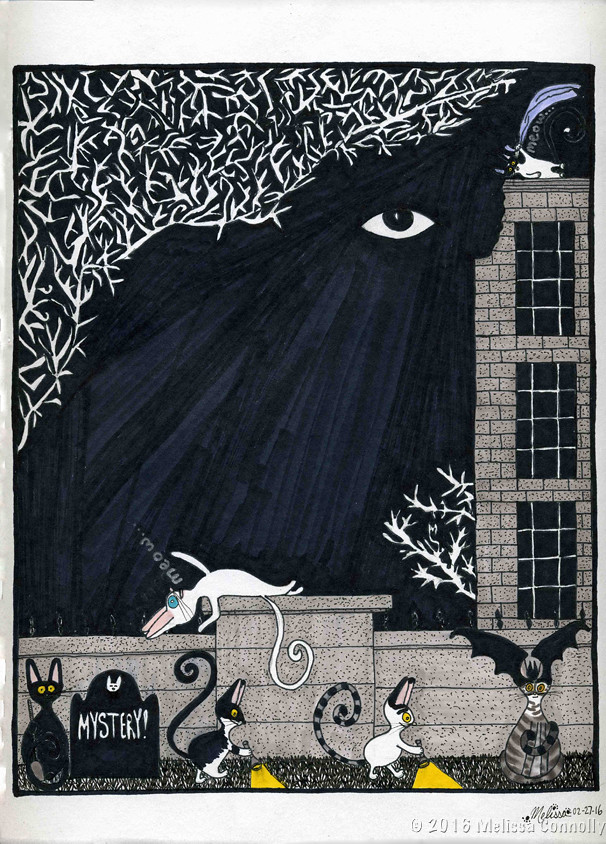
Mystery

When I was growing up, PBS's Mystery! opened their shows with title sequences by artist Edward Gorey. I don't remember the mysteries, but the opening animations are still in my head.

Mystery! title sequences (© PBS, circa 1980s) 

Here, the Kitties' pay tribute.
Mystery (February 27, 2016)
(Illustration Friday: February 5, 2016)


Tuesday, March 01, 2016

2015 in Review: Let the Music Play!

Hi everyone,

As 2015 rolled on, I found plenty of live music to entertain me around town. Here's the rundown.

Roy Ayers, Vibes, Blues Alley (February 7)
My dad and I bought tickets to see Roy Ayers at Blues Alley without really knowing what to expect. What we got was The King of the Vibes, whose expressive face is just as entertaining as his talent. At 75, this guy knows what he's doing, playing his instrument to perfection while working the crowd with infectious joy. By the end of the night, this show practically turned into a singalong dance party; Roy Ayers knows how to have a good time. Here's a recent performance of one of his hits, "Everybody Loves the Sunshine."  

Jason Marsalis, Vibes, Blues Alley (April 15)
©  John Jay Kim
While enjoying Roy Ayers, I noticed Jason Marsalis's last name on the list of upcoming Blues Alley events. I bought tickets, figuring he'd be just as good as his brothers and dad, and I was right. The youngest of the Marsalis brothers, Jason Marsalis made his Blues Alley debut on this night, performing with his quartet a set of mostly his own compositions. At the end of the night, I came away with two Jason Marsalis CDs. This guy is going places, and I can say I saw him way back when. Here's a recent performance of the Jason Marsalis Vibes Quartet playing "Offbeat Personality."

Bobby McFerrin, Vocals, The Warner Theatre (May 20)
I attended the Benefit Concert for Duke Ellington School of the Arts in 2014 when Sting was the honoree and the event was held at Strathmore. In 2015, I attended the event at Warner Theatre not only for the main attraction, Bobby McFerrin, but also one of his special guests, Christylez Bacon. (That's him in the photo.) An alumni of the school, I first saw Christylez Bacon performing the beatbox, drums, and guitar, singing his own hip-hop songs for free at D.C.'s Downtown Holiday Market a few winters ago. Back then, his performance made all of us shoppers stop shopping and crowd around the outdoor stage to watch his show. I've been following him ever since. Known for his beatboxing, I was excited about his chance here to perform with the great Bobby McFerrin; isn't he the king of the beatboxers?

Bobby McFerrin was joined by so many other graduates and students of the school that the concert felt more like a showcase for these up-and-coming artists rather than the Bobby McFerrin greatest hits collection I was expecting. Instead, he improvised with the younger generation, noticeably giving them the thrill of their lives. All of the young performers were great, emerging talents I expect to hear from soon, but my favorite parts of this show were when Bobby McFerrin did his own thing with his amazing voice. Some things you just can't replicate. Here is a short clip of Bobby McFerrin improvising during the show with impressive graduate Maimouna Youssef.

Ginger Baker and Jazz Confusion, Drums, Howard Theatre (June 19)
Dad and I saw Ginger Baker live for the first time in 2014. This time, he returned to the same venue with the same band, playing the same songs, and promoting the same album. With his excellent backing band, Jazz Confusion – comprised of saxophonist Pee Wee Ellis, bassist Alec Dankworth, and percussionist Abbas Dodoo – this entertaining show will never get old. The odd, worldly beats and sounds filling Howard Theatre kept us bouncing in our seats. Abbas Dodoo served as the night's emcee and introduced Ginger Baker to the stage like a prize fighter. He seemed healthier than the year before (when we thought he might die on the spot at any time). Still, true to form, he greeted us with the story that he just got out of critical care after a long bout of pneumonia: "I showed up at the Pearly Gates and they sent me back, so here I am." Lucky us! Here's a snippet of Ginger Baker and Jazz Confusion performing "Footprints."

Terence Blanchard, Trumpet, Blues Alley (June 20)
As with Ginger Baker, if Terence Blanchard is in town, my dad and I will likely be there. We've seen him several times over the years, and he always offers something new and exciting. This time, I wasn't sure if I liked the music at first: everyone was playing their own things, heading in all sorts of directions. Eventually, though, they all came together in amazing ways. Terence Blanchard is a pro, and we're lucky to be invited to see him in action. By the end of his shows, our hair is typically blown back, and we leave in a daze. You can count on it from this guy, no matter what he plays. Here's a performance of "Magnetic" at Blues Alley in 2013.

Justin Kauflin Trio, Piano, Bohemian Caverns (September 4) 
Justin Kauflin lost his sight by age 11. Given his disability, his music has a spiritual component and felt different from the other jazz shows I'd seen. I didn't have the best view of the musicians from my seat and therefore don't have many memorable moments to share. Though I didn't recognize any of the standards or original compositions they played, the Jeff Kauflin Trio was impressive, and my friends really liked the show. The supportive crowd at Bohemian Caverns was captivated, swaying and calling out at times, as if it were a rousing Sunday service. Here's the Justin Kauflin Trio performing "Be Thou my Vision."

Roy Hargrove, Trumpet, Blues Alley (October 6, 2015)
© Robb D. Cohen
I first saw Roy Hargrove for just a minute or two during a Jason Moran performance for Millennium Stage at the Kennedy Center. He made a cameo appearance during a song, and all I remember about it is how cool he looked in his shades, hat, and slick outfit. I always see his name on Blues Alley's roster of upcoming performances, and when it turned up again, I was determined to go this time. As expected, Roy Hargrove is cool! He has a mohawk and wore his sunglasses the entire time. The show ran the spectrum from very modern to traditional jazz, though I didn't recognize the songs. Roy Hargrove didn't speak to us until the end, when he introduced his band and, when cheered on for an encore, he sang a '50s-style Motown song called "Soothe Me." Roy Hargrove is smooth.... Here's the Roy Hargrove Quintet performing a song last year in Paris.
   
Min Xiao-Fen, Pipa and Ruan, The Hill Center at the Old Naval Hospital (October 7)
I received some e-mails about Min Xiao-Fen's upcoming show at The Hill Center at the Old Naval Hospital. Despite not recognizing her and not knowing where the Hill Center was, I didn't hesitate to buy a ticket because her program was inspired by Thelonious Monk. Hearing Thelonious Monk played on traditional Chinese instruments was bound to be an interesting experience. The pipa and ruan are lute-type instruments that are positioned upright or flat on a lap and played like a harp. Min Xiao-Fen is a cool-looking lady. She wore traditional Chinese clothing and has a short punky hairstyle. When she sang in Chinese, the tones sounded crazy to me, but maybe that's just because I didn't understand the language.

For the first half of the concert, she played traditional pipa music, which was beautiful. The second half was devoted to Thelonious Monk, and I only recognized two of the songs, including "Misterioso," but they were all excellent. I loved how different her interpretation sounded on her instruments. At the end of the concert, she mentioned that she'll be back this spring to premiere a new piece of work. I'll be on the look out. Here, Min Xiao-Fen performs her take on two Thelonious Monk composition, "Misterioso" and "Ask Me Now."

The Hill Center is a great discovery! This community center, housed in the historic Old Naval Hospital, is located in the Eastern Market neighborhood and offers all sorts of events from concerts and documentary film screenings to cooking, art, and exercise classes and lectures. This concert was in a small room with three rows of folding chairs and a few side table. The stage was a step off the floor, making for a casual, intimate experience. I look forward to making more visits to this unique venue.  

Kendrick Lamar, Vocals, Kennedy Center (October 20)
©  Kennedy Center
I first noticed Kendrick Lamar when he performed on The Colbert Report in 2014. During the interview, I loved that Stephen Colbert made him really laugh. Then, Kendrick Lamar blew everyone away with a brand new song, and I never forgot about him. I was shocked to see that he was coming to the Kennedy Center to perform with the National Symphony Orchestra and snatched up some tickets.

The show opened with a fantastic acapella singing group called the Mellow Tones, comprised of students from the Duke Ellington School for the Arts. They sang standards and ended their short set with Marvin Gaye's "What's Going On," which they said was a fitting song to lead into the socially conscious main attraction.

I can't claim to know everything Kendrick Lamar raps about, but I see the talent. He's an amazing performer, and this show was special. The whole crowd – full of more familiar followers – got gangsta, rapping right along with him. Adding the orchestra with his backing band made everything more dramatic and sometimes over the top, but it somehow created a perfect collaboration. I wonder if the Kennedy Center has ever been so rowdy and noisy as it became that night. They should do this more often. Congrats to Kendrick Lamar for scoring 11 Grammy nominations and winning 5 awards this year, including Best Rap Album To Pimp a Butterfly.

Christian McBride and Edgar Meyer, Bass, Sixth and I Synagogue (October 22)
The idea of two bassists playing songs together intrigued me, so I bought a ticket to this show at the Sixth and I Synagogue. I know of and have seen Christian McBride before, but Edgar Meyer was a new name to me. Wearing a white button-down shirt and tie with grey wool pants, he looked as if he had just come from a business meeting, but he plays cool. For most of this great concert, the two master bassists played together, one using a bow and one plucking with fingers. Sometimes they'd switch roles mid songs, the showoffs! (Yes, they're that good.) They also each played one song on their own: Christian McBride chose "Fly Me to the Moon"  while Edgar Meyer played a Bach piece. Their version of Thelonious Monk's "Misterioso" excited me, and I was impressed by their original compositions. When I got home, by coincidence, I found in my pile of CDs an unopened bluegrass one called Appalachian Journey, which I had forgotten about and my dad had forgotten giving to me. It features Edgar Meyer in the band. Someone in the universe knew I'd become a fan eventually.

I can't find any videos of Christian McBride and Edgar Meyer performing together, but I swear this dreamy event happened! To give you an idea of how it went, here's a bass duet of "Bye Bye Blackbird" that Christian McBride performed with someone else I don't recognize. And, here is Edgar Meyer performing a bass duet with Victor Wooten back in 2008.

Jody Watley and Shalamar Reloaded, Vocals, Blues Alley (November 7)
On my way to Blues Alley, my cab driver asked who I was seeing there. When I told him, he exclaimed, "Jody Watley – is she still singing?" I remember Jody Watley well from the '90s. Many of her songs, like "Real Love," ""Looking for a New Love," and "Don't You Want Me" were on the radio often, and I remember her videos too. I didn't know what to expect from her show at Blues Alley and wondered if she had transitioned to singing jazz standards. Unlike any other show I've attended at Blues Alley, Jody Watley's greatest hits were blasting out of the speakers when I arrived, and two life-size posters of her with her Shalamar backup singers flanked the sides of the stage. Blues Alley took on a dance club atmosphere. Typically when performers are introduced, they come downstairs from their second-floor dressing room and weave through the tables to get to the stage at the front of the room. Jody Watley and Shalamar Reloaded stopped halfway down the stairs to pose for an imaginary photo shoot.

The Blues Alley stage is pretty tiny, but once on there, Jody Watley and company really danced on it with actual choreographed steps. Aside from a different hairstyle (long braids) and being a bit older, Jody Watley seems the same as always – fashionable, confident, and full of dance moves. She brought a wardrobe with her that included sneakers to change into from her black stilettos so that she wouldn't break an ankle dancing; a coat to change up her look mid performance; and accessories, like big black-rimmed glasses, her trademark huge hoop earrings, and a sparkly black fan, which she eventually gave away to someone who asked for it in the front row: "Come find me after the show and I'll sign it for you," she said. "Then, whenever you're hot, you'll think of Jody Watley." Here's are Jody Watley and Shalamar Reloaded performing "Take That to the Bank."

Jody Watley is a sassy, classy lady and this show was so much fun. I'm not sure why she booked such a small venue, but I'll take it. She took requests and sang her hits. She walked through the crowd to greet us and shake our hands. And, she gave us great advice: "Music can change your mood. When you're down, all you have to do is just put some on, blast it, and work it!"

That's the truth.


Sunday, February 28, 2016

Mysterious Thelonious

Hi everyone,

Jason Moran
Last March, the Kennedy Center celebrated Thelonious Monk with two events, a listening party and an homage to Monk's landmark Town Hall Concert in New York in 1959. Here's how super cool they were.

Thelonious Monk Listening Party 
(March 21, 2015)

When Jason Moran took over the post of Artistic Director of Jazz at the Kennedy Center, I had no idea who he was. I don't know if these listening parties at the Kennedy Center started with him, but they're genius!

Thelonious Monk always wore great hats. 
© Michael Ochs/Getty
Thelonious Monk attracted me to this event, which had no description. It turned out to be just as it sounds: a listening party, during which we listened to pieces of music and talked about them afterward, "like you used you to with your friends when you brought home a new record," Jason Moran explained. I didn't get together with my friends to discuss my favorite albums when I was younger, but I knew what he meant: whenever I bought a new one, I listened and studied it as soon as I got home. This idea was right up my alley, and who's better talk about than Thelonious! At this event, about 30 of us sat in a circle with panelists Jason Moran, bassist Taurus Mateen, and French horn player Robert "Brother Ah"  Northern, who actually performed with Thelonious Monk. We focused on the large speakers set up in the center of the room.

The panelists picked the songs for the program and explained why they were special to them. This was more of a talk amongst themselves than a group discussion, and I loved learning first-hand accounts of Thelonious Monk. Robert Northern told us that the musician was inspired to write "Evidence" after watching a community basketball game and thinking about his therapist, who Monk said had "no evidence" that he's manic. Aside from "Evidence," we listened to "Little Rootie Tootie," "Crepuscule with Nellie," "Thelonious," and "Nutty." I'd never heard "Nutty" before, and time ran out before they could talk about it. Who knew that this mysterious $12 educational event would leave me wanting more? It was an hour well spent and one of the many reasons why the Kennedy Center is one of the best places in town.

Jason Moran's In My Mind: Monk at Town Hall, 1959
(March 28, 2015)

The Thelonious Monk listening party served as prep for this main event, a multimedia re-imagining of Thelonious Monk's Town Hall concert in New York in 1959. Here's Jason Moran talking about it:

Jason Moran previews In My Mind: Monk at Town Hall, 1959© The Kennedy Center 

Thelonious Monk thinks and plays the piano like no one else can. The concept of this show – to capture that spirit in a new piece of work – seems like an impossible task to me, so I was excited to see the attempt.

To start the show, Jason Moran walked on stage, sat at the piano, and put on giant headphones. Thelonious Monk began to play on the speakers, and soon Jason Moran began to play along in his own way. As they played together, on a large screen above him, we toured Jason Moran's childhood home as he talked about his upbringing and introduction to Thelonious Monk's music when he was 13 years old. The narrative on screen also introduced Jason Moran's band – The Big Bandwagon – Ralph Alessi on trumpet, Walter Smith on tenor saxophone, Frank Lacy on trombone, Bob Stewart on tuba, Taurus Mateen on bass, and Nasheet Waits on drums. One by one, they joined in on playing introductory song with Jason Moran.


This tribute to Thelonious Monk's 1959 Town Hall concert was a mix of music and biography. Following the same set list as the original concert, the program paused at times for Jason Moran's stories about Thelonious Monk's influence on his own life or to play archival video and audio recordings of Thelonious Monk himself – giving multilayered insight into the man and his music.

The first song, "Thelonious," was followed by "Friday, the 13th" and "Monk's Mood." Then, after the screen informed us of Monk's family ancestry and roots in slavery, the band revisited "Thelonious." They then broke into a New Orleans-style funeral song as each band member headed backstage, one by one. We could hear them playing in the distance; as their sound faded, Thelonious Monk took our attention through a 1959 audio recording, during which he talked about music and the songs he was rehearsing for the Town Hall concert.

Sometimes, Thelonious Monk liked 
to dance mid performance. 
After he finished, the band returned for the second half of the show. They played "Little Rootie Tootie," "Thelonious" (again), and "Crepuscule with Nellie." They made each of these songs their own, playing off of the original. It felt like they were inside Thelonious Monk's chaotic mind coming up with these tunes. Each musician had moments to shine, playing their own melodies, but eventually they all came together to play the song we recognized.

By the end of the show, all the musicians wore headphones again, listening to and jamming with Thelonious Monk. One by one, they took off their sets and left the stage. This time, they walked through the aisles of the orchestra level and out the concert hall doors. Jason Moran was the last to leave, jumping off the stage to join his bandmates in the Kennedy Center's main hall. Out there, we crowded the main-level entrance and stairways, watching them finish the song and cheering as they did. I wonder if anyone attending other performances at the Kennedy Center that night knew what they were missing. Thelonious Monk was in the house!

Watch this episode of Jazz in America, hosted by bassist Christian McBride, for more from Jason Moran about Thelonious Monk's life and influence and to see segments from this amazing show.

Enjoy!

Wednesday, February 24, 2016

2015 in Review: That's Dancing!

Savion Glover's STePz, Strathmore, Bethesda, Maryland (February 6, 2015)
On the STePz... © Andrea Mohin/New York Times
Savion Glover always brings something new. Unlike any other dancer, this guy makes me sit at attention and, by the end of each performance, my mouth is usually gaping and my eyes are dry from not blinking.

STePz seemed more formal than the other free-flowing Savion Glover shows I've seen. This one celebrated the history of music and dance. It paid tribute to several dance styles other than tap, as everything from classical and Latin to pop blasts through the speakers. Savion performed a moving solo honoring tap pioneer Bill Robinson during "Mr. Bojangles," where he and his shadow evoke the past with Robinson's familiar moves. On the fly after the intermission, he and the three lovely lady tappers accompanying him during the show – Robin Watson, Sarah Savelli, and Lisa LaTouche – decided to sing an acapella verse and chorus of Michael Jackson's "The Way You Make Me Feel."

The show included a few short sets of stairs (the STePz?) on which Savion and the other dancers tapped – sometimes choreographed, sometimes improvised. In one memorable moment, Savion and fellow hoofer Marshall Davis, Jr., battled it out on the steps, mimicking and adding to each other's improvisational beats. In another, the three ladies took advantage of the stairs for some choreographed tapping that saluted other dance styles, like ballet, tango, and jazz. The show ended with the whole troupe dancing to Stevie Wonder's "Sir Duke." They froze at the end in classic superhero poses with one arm punched skyward. On cue, we erupted in cheers – until we had to leave and deal with our delirium at home.

Savion Glover never disappoints me. Here's a taste of the show:


Savion Glover's STePz video © Savion Glover

Alvin Ailey American Dance Theatre, Kennedy Center, Washington, D.C. (February 7, 2015)
From "Revelations" © Gert Krautbauer
Seeing the Alvin Ailey dance troupe is always a good idea. Having said that, my heart was still beating to Savion Glover's taps from the night before when I attended this afternoon matinee, so my memory of it is vague. However, I liked this performance very much.

Whenever the Alvin Ailey company comes to the Kennedy Center, it's booked there for a few days and offers different dances at different performances. This show's dances were created over the course of more than 50 years. "Polish Pieces" first appeared in 1996, "Bad Blood" premiered in 1986, and "Caught" is from 2004. The showstopper at the end of every show this time around was "Revelations," a dance created in 1960 and set to traditional, spiritual music.

What I always remember about Alvin Ailey dance shows is the bodies – how the dancers hold their alignment with precision and move in inventive ways. The music informs the movements, and the costumes accentuate the emotion. "Revelations," for example, sweeps you up as the dancers in full colorful skirts twirl across the stage in unison. Alvin Ailey American Dance Theatre gives you a full experience that touches all the senses through movement and leaves you with something new to talk about afterward. This afternoon's inspiring performance had us singing along, cheering, and clapping for encores.

It's a coincidence that I saw a story about the Alvin Ailey dance troupe on PBS Newshour last night. Correspondent Jeffrey Brown talked to Artistic Director Robert Battle about his aim to take the company in a new direction while honoring its storied past. Check it out:


Twyla Tharp 50th Anniversary Tour, Kennedy Center, Washington, D.C. (November 13, 2015) 
From "Yowzie" © Kevin Parry
Although I've always known her name, I'd never seen Twyla Tharp's dances until this 50th anniversary performance. "Long ago, I made the choice to mark this point in my career not with events celebrating the past, but with new dances showing what I had learned and some of what I had experienced during this working life," Tharp explains about the show. A short fanfare piece introduced each half of the the program, and while the two halves couldn't have been more different in style or music, they somehow made sense together.

The first half explored Bach's preludes and fugues through balletic moves. During these short piano pieces, the dancers, who were dressed in plain but bright one-color costumes, personified the notes being played. Each entertaining piece was different in the number of dancers and their stories. All were infused with surprising funny moments told through dance. The second half showcased "Yowzie," a performance set to a series of 1920s jazz tunes, many of which I didn't recognize, though I knew the composers, like Jelly Roll Morton and Fats Waller. For these dances, the performers were dressed in bright, patterned costumes and accessorized with headbands or hats. They never stopped moving and sometimes looked like jelly bouncing into and off each other in joyful, controlled chaos.

The innovation Twyla Tharp's choreography is a thrill to watch. I love most that the humor and joy she finds through her work is evident and contagious with every step. Here's a snippet of the show:


Twyla Tharp 50th Anniversary Tour video © Twyla Tharp

Dancing is good for the soul, even if you're just watching. So, go treat yourself to a performance and you might find yourself dancing your way home.