Monday, March 16, 2015

Leaders in American Song: George Gershwin and Cole Porter

Hi everyone,

Because I grew up watching movie musicals, I love all those old songs. For the last few years, I've noticed that the Smithsonian hosts lectures on songwriters and performers of that era. I wrote about their Ella Fitzgerald event last year. In addition to that one, I attended two lectures about American songwriters George Gershwin and Cole Porter, both hosted by pianist Robert Wyatt.

Gershwin, By George!, Smithsonian Institution, National Museum of the American Indian, March 27, 2015

My love for George Gershwin (1898-1937) probably stems from my love for An American in Paris, the 1951 Best Picture Oscar winner with an exclusive Gershwin soundtrack. I also saw Hershey Felder's inspiring one-man show George Gershwin Alone at Ford's Theatre in 2003.

George Gershwin was an amazing composer and musician, a prodigy who accomplished so much in his 37 years, from classical works and piano solos to musical theatre scores and film songs. Together with his lyricist brother Ira, they formed one of the best known songwriting teams of the 20th century. I bet you know some of their songs [click on the titles to hear them]: "But Not for Me," "Embraceable You," "Nice Work If You Can Get It," "They Can't Take That Away From Me," and "Someone To Watch Over Me."

When George Gershwin first started complaining about headaches, his friends assumed he was being overly dramatic to get attention, but he died of a brain tumor shortly thereafter. About that, the composer's writer/friend John O'Hare appropriately said, "George Gershwin died on July 11, 1937, but I don't have to believe it if I don't want to."

What attracted me most to Robert Wyatt's event, Gershwin, By George!, was that it included his performance on piano of Gershwin's orchestral masterpiece "Rhapsody in Blue." You can't get much better than this piece of music, which is always associated with the vibrancy of New York City living. Hearing it live is a treat! While I waited for it, I learned some things about George Gershwin during Mr. Wyatt's informative lecture:
  • George Gershwin's parents bought a piano when George was 10. He sat on the bench and began to play it before ever having a lesson, so his parents found him a teacher, Charles Hambitzer, who later said, "I have a new pupil who will make his mark if anybody will. The boy is a genius." 
  • Growing up, he loved listening to ragtime composer/pianist Scott Joplin. 
  • He wrote the opera Porgy and Bess, based on the book by DuBose Heyward. Although not a songwriter, the author wrote lyrics to some of its most memorable songs, including "Summertime," "A Woman's a Sometimes Thing," and "My Man's Gone Now," but George's brother Ira got all the credit. 
  • He wrote "An American in Paris" before ever having gone to Paris and played it in Carnegie Hall, New York, in 1928. (Click the song's title to hear George Gershwin himself performing this piece.) 
  • "Our Love Is Here to Stay" is the last song George Gershwin ever wrote. Knowing that makes his brother's lyrics all the more poignant, don't you think? Below, hear the song, performed by Gene Kelly and Leslie Caron in An American in Paris.

"Our Love Is Here to Stay" from An American in Paris (©1951, MGM). 


Cole Porter: Sophisticate of American Song, Smithsonian Institution, National Museum of American History, July 22, 2014
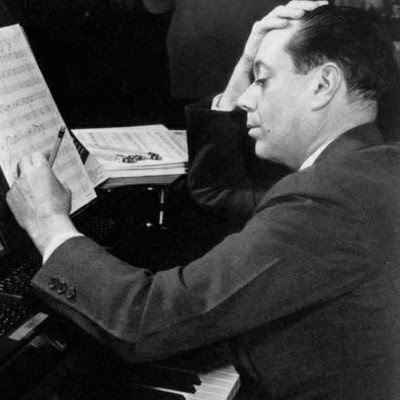
My love for Cole Porter (1891-1964) doesn't come for a specific musical but a bunch of them, like Kiss Me Kate (1953) and Silk Stockings (1957). From there, I checked out MGM's 1946 Cole Porter biography Night and Day, starring Cary Grant, though it's pretty inaccurate in that Old Hollywood sort of way. A better biography is De-lovely (2004), starring Kevin Kline. 

Born into wealth, Cole Porter never needed money. He pursued music and found success as a composer in musical theatre. Although gay, he married friend Linda Lee Thomas, and – content with their platonic relationship – they lived lavishly and traveled abroad. A horse-riding accident in 1937 led to 33 operations on his legs and constant pain for the rest of his life. Some of his many popular tunes include the following [click on the titles to hear them]: "Let's Do It, Let's Fall in Love," "Night and Day," "Anything Goes," "I Get a Kick Out of You," "It's De-Lovely," "I've Got You Under My Skin,""My Heart Belongs to Daddy," "So In Love," "I Love Paris," "All of You," and "True Love." 

Although Robert Wyatt didn't play piano during his lecture, Cole Porter: Sophisticate of American Song, he provided some great archival footage and trivia. Here are some interesting things that I learned:
  • Cole Porter was very smart. Originally from Peru, Indiana, he went to school on the East Coast and didn't contact his family the entire time he was there. He was valedictorian of his class at the Worcester Academy in Massachusetts. He went to Yale University, where he participated in lots of extracurricular activities but didn't bother with his studies. Then, he was nearly expelled from Harvard Law School but was transferred to music school instead. 
  • He was very good friends with composer Irving Berlin, but composer Lorenz Hart was not a fan. He also didn't like Frank Sinatra's versions of his songs. 
  • He wrote at least 800 songs, and "Love for Sale" was his favorite. 
  • After he wrote "Your the Top," everyone asked him to add more verses to it; he added 300 lyrics  in a week. (Click the song's title to hear Cole Porter himself perform it.) 
  •  After his horse-riding accident, he named his left leg Geraldine and his right leg Josephine. (Hallelujah for his sense of humor!)  
  • In 1948, his musical Kiss Me Kate became the first to win the Tony for best musical. Below, hear the song "Too Darn Hot," performed by my favorite tap-dancing lady, Ann Miller, from the film version of Kiss Me Kate. 

"Too Darn Hot" from Kiss Me Kate (©1953, MGM)


Where would we be without these two prolific composers' astounding contributions to music? Don't you feel grateful to them – and in the mood for an MGM musical marathon right now?

Friday, March 13, 2015

Twice the Sting

Hi everyone,

Did you know that Sting has the flu with a high fever? Under doctors' orders, he's canceled two shows in New York this week. It's a good thing I waited a year to talk about these concerts to hold you over until he's feeling better.

You all know how devoted I am. Last year, he planned two different local shows two days in a row, so it was my best week ever. First up was a charity performance he shared with "very special guest Paul Simon" at Strathmore in Bethesda, Maryland, which benefited the Duke Ellington School of the Arts. The next night, Sting and Paul Simon performed at Verizon Center in D.C. in support of their On Stage Together tour. I was torn about going to both shows: Must I? Will they be the same? Will it be worth it? Of course!

The first show was on Wednesday, March 12, and I came down with a cold two days before the event. I gave myself a deadline to be rid of it before the first concert. Wednesday morning, though, I was unsure whether I could get out of bed, never mind to Bethesda! But I did get out of bed, put in a full day of work at home, and miraculously felt pretty healthy by afternoon. That's it: Sting has magical powers!

The Performance Series of Legends for the Duke Ellington School  of the Arts: Sting and Very Special Guest Paul Simon, Strathmore, Bethesda, Maryland, March 12, 2014

When I arrived, through hurricane-level rain, I was greeted with a program. The cover read, "Sting and very special guest Paul Simon and [previously unannounced] legendary musician Stevie Wonder." I nearly fainted. It was short-lived delirium, though: at the start, they announced that Stevie Wonder had to cancel his appearance in order to attend a funeral. That's an understandable excuse. Then the music started and I forgot that I was disappointed.

The Duke Ellington School of the Arts serves 9th to 12th graders who are immersed in a full academic course and an arts major, which could be dance, literary media and communications, museum studies, instrumental or vocal music, theatre, technical design and production, or visual arts. While this annual event is a wonderful and worthy cause, the organizers really drilled it into our heads that they wanted more money from us than the cost of our ticket. They reminded us before, during, and immediately after the show, which killed a bit of my concert-induced euphoria. I started to feel like I was watching PBS during pledge week or attending an amateur high school fundraiser. But they have to do what they have to do: the arts are essential, so support this amazing school!

Strathmore provides a beautiful blonde-wood-filled concert hall with fantastic acoustics. Despite its three levels of seats, the space is intimate with great views from any spot. My seat was in the second row of the top level, and I still felt relatively close to the stage. Let's get to the main event!

To start things off, the students of the Duke Ellington School for the Arts performed in an orchestra, sang in a small choir, and danced on stage through two of my favorite Police songs. "Demolition Man" included a spectacular guitar solo and four dancers. "Synchronicity" had 20 dancers performing on stage, at first, in pitch black to show off their glowing, blinking shoes. These kids were so bright and joyful, they lit up the room, lifted our spirits, and let us know what made this evening so special.

Next, they accompanied Sting as he sang three of his songs ("Englishman in New York," "Every Little Thing She Does Is Magic," and "Driven to Tears"). Impressed, he suggested that they help him out tomorrow night too, but they left the stage, and Sting played with his own band. Paul Simon shared the stage with him sporadically. They sang some songs as duets, like Sting's "Brand New Day" and Simon & Garfunkel's "The Boxer." They also traded songs; for example, Paul Simon sang Sting's "Fragile," and Sting sang Paul Simon's "America."

That was one of my favorite parts: Before singing "America," Sting reminisced about coming to this country, aiming for stardom with The Police. He felt driven but uncertain, anxious, and excited about the future. "America," which was playing on the radio during that time, captures all those feelings for him. He sang a quiet, acoustic version of it, which was beautiful and moving, and then he transitioned into a fully electric version of "Message in a Bottle." The Police have arrived!

All that emotion was released during the next song, "Desert Rose," which Sting infused with Bollywood sounds. I loved this new arrangement, but the best part of this song on that night was watching a lone fan – a big black guy who was built like a football player  dancing up a storm in one of the front balconies.

After that, the choir kids returned and sang "Bridge Over Troubled Water" with both Sting and Paul Simon. During this song and "The Boxer," their harmonies blended beautifully. The woman next to me, who was clearly a big Paul Simon fan, got very excited when this song started, and her friends all knew that this was her moment. When the kids began singing its chorus, the song transformed into gospel, and she burst into tears and cried through the rest of it. She even got Kleenex out of her purse.

Sting and Paul Simon ended the show with another duet, "Every Breath You Take." Always a crowd-pleaser, this song capped off an inspiring night! As we gathered our coats, I wanted to ask the woman who cried if she was all right, but instead I asked if she enjoyed the concert. "So much!" she said. "Just seeing them with the kids, it's like....The kids are amazing!" Agreed! That's what it was all about.

Here's a short synopsis about this charity event, which gives you a glimpse of how it went:


Courtesy of Branden Kownacki, You Tube video: https://youtu.be/GakfTI7kZwQ


Paul Simon and Sting: On Stage Together, Verizon Center, Washington, D.C., March 13, 2014 

The next night, I felt even healthier. The Verizon Center is a huge stadium, where the Washington Wizards and other sports teams play. These stadiums are pretty impersonal but I go when necessary.

Singing together at Beacon Theatre, New York, 2011
I was immediately struck by how different this performance was compared to the night before. It was bigger and better to fit the enormous space and satisfy the massive crowd. Sting and Paul Simon have been New York neighbors for years, and the idea for touring together came to them after they performed together at Sting's 60th birthday concert at Beacon Theatre in New York, a charity event which benefited the Robin Hood Foundation. (I was there!) Sting described their On Stage Together tour as a musical experiment that merged their bands and musical styles together. Both of their bands shared the stage. This combined group of excellent supporting musicians excelled in the energetic atmosphere, creating music that was full, all-encompassing, and infectious.

As they did the night before, Sting and Paul Simon sang duets and traded songs. While last night's show was more Sting-centric, Paul Simon sang many more of his songs during this concert, balancing out the number of compositions between the two of them. The distinction between Paul Simon fans and Sting fans was much more prevalent too: Groups of us danced and cheered during Sting songs while others sat stone-faced, quietly waiting for a Paul Simon song, and vice versa. Some of Paul Simon's songs were new to me, but I knew most of them, so I sang and danced through it all. This concert was like a joint greatest hits celebration.

On the Sting side, new from the previous night were: "Fields of Gold," "Hounds of Winter," "They Dance Alone," and "Roxanne." I was so excited about "They Dance Alone," a slow song about political prisoners that Sting includes on his 1987 ...Nothing Like the Sun album. I know what you're thinking, but it's an amazing, uplifting song that changes tempo toward the end to signify hope and resilience. Amid my sea of oblivious Paul Simon fans, I longed to be with a group of girls I saw in the middle of the stadium who were dancing in the aisles – as you should by the end of that song.

My favorite thing about Paul Simon is his sense of humor. I think I remember him more from his stints on Saturday Night Live than from his music. This concert reminded me of all of his great classics and introduced me to some new one. Among the hits he performed that night were "The Boy in a Bubble," "Mother and Child," "50 Ways to Leave Your Lover," "Graceland," "Still Crazy After All These Years," "Me and Julio Down By the School Yard," "Diamonds on the Soles of Their Shoes," and "Call Me Al."

Sting and Paul Simon shared the same duets as the night before, like "The Boxer" and "Bridge Over Troubled Water," but Strathmore's intimacy trumped Verizon's arena setting. Here, they also threw in some songs written by other people, like Paul Simon singing "Wheels" by Chet Atkins.

They performed the second of two encores without their bands. Paul Simon said, "The idea for this tour started with two voices and two guitars, so we felt the show should end that way." In honor of Phil Everly, who passed away in January, they sang an acoustic version of the Everly Brothers' "When Will I Be Loved." After such a vibrant, energetic show, this quiet song reminded us of why we were all there. Blended together, these voices and combined musicianship guarantee an unforgettable musical experience.

Sting and Paul Simon's On Stage Together tour is in Europe right now. If they are coming to a town near you, get your ticket!

Feel better soon, Sting!


Credits: Duke Ellington School of the Arts benefit  poster: courtesy of Strathmore; video courtesy of Branden Kownacki; Image from Strathmore performance: Kyle Gufstafson/WashingtonLife.com; Beacon Theatre image: Andy Kropa, Invision/Associated Press; Image from On Stage Together tour show in Houston, Texas, February 2014: Kevin Mazur/WireImages; On Stage Together tour poster: LiveNation

Monday, March 09, 2015

Johnny Kitties: Celebrating Johnny Depp Film #47 – Tusk (2014)


[What is Johnny Kitties? See Johnny Kitties: Celebrating Johnny Depp for all the details. Visit the new Johnny Kitties page for a full list of Johnny Depp's filmography and links to all previous Johnny Kitties blog posts.]

I pushed whimsy all the way into making a movie, one of my favorite movies I've ever made....a movie that absolutely changed my life....Push whimsy; that's all I'm gonna say.

Never mind what the marketplace demands. Nobody's looking for a movie about a guy who turns another guy into a walrus except you. Make it the ultimate movie that you wanna watch.

Let's see how weird we can take this.

– Writer/Director Kevin Smith on making Tusk

What kind of movie is this?
In Tusk, a horror movie written and directed by Kevin Smith, controversial podcaster Wallace Bryton (Justin Long) gets into a bad situation while looking for a story for next week's episode. He meets old seafaring adventurer Howard Howe (Michael Parks), who has a story to tell and a hidden agenda. Eventually, Mr. Howe reveals that, while trapped on an island, he formed a life-changing connection to a walrus and, since then, intends to find someone to replace his long-lost friend. Wallace's podcast partner (Haley Joel Osment) and girlfriend (Genesis Rodriguez) become alarmed by phone messages from Wallace, saying that he's in the backwoods of Canada, trapped in a creepy house with a crazy guy who wants to turn him into a walrus. So, they set off to rescue him with the help of a special investigator who's already on the trail. 

Why does Johnny have to be in this movie?
I've never been so freaked out about seeing a movie. You might remember that, these days, scary movies really scare me. I must have watched An American Werewolf in London and Poltergeist too many times as a kid. 

When Tusk arrived in D.C., I planned to see it in the middle of the afternoon so that I'd be able to go home in broad daylight and have the rest of the day to shake it off. As it happened, however, I was out of town over opening weekend and realized the following Thursday that Tusk wasn't going to last in theaters. I had to go that night, if at all. I texted my dilemma to a friend, who always helps me reason these things out:
Me: I think Tusk is leaving local theaters today. I might have to see it tonight, in the dark. 
Her: Don't do it! For your own sake!
Me: Really? Is it THAT bad?
Her: It depends on your tolerance, but the trailers are not encouraging.
Me: I know, yet I'm hoping for some Kevin Smith humor to diffuse things...I'm reading moviegoer reviews... 
Me, a little later: Reviews are not helping to make up my mind.

I made it across the street from my apartment before I realized that my friend is right: there is no shame in waiting for the DVD so that I could be freaked out in the comfort of my own apartment with my cat for company. Netflix delivered Tusk to me in January, and I texted my friend the news:
Me: I just watched Tusk and survived.
Her: Ewww!
   
I can't believe I'm saying this, but I really like this movie! I started out peeking through my fingers to watch it, waiting for something sudden, awful, and disgusting to happen. I was cozy under a blanket with my cat by my side and found myself entertained, intrigued, and impressed. 

See where creativity can lead?
Kevin Smith and SModcast
partner in crime, Scott Moiser
I think most people know Kevin Smith from his popular films Clerks, Chasing Amy, and Dogma. As his popularity grew, so did his studio offers. One of the best things about Kevin Smith's work, though, is that he fully immerses himself in it by writing the story and script and filming it as he sees it. When he started getting hired as a director for movies he had nothing to do with developing, he didn't see the point and became disenchanted by the movie business. So, he walked away from Hollywood, content to make a decent living doing other things, like making live appearances about his work and podcasting.

Since 2007, Kevin Smith has been broadcasting podcasts (or SModcasts, as he calls them) through his company, SModCo. During his SModcast, called "The Walrus and The Carpenter," he mentioned an ad that he saw in a British newspaper: someone has a room to rent, and all you have to do to live there is dress up like a walrus for 2 hours every day. "The line that really captured my imagination was, 'I have for some time been constructing a realistic walrus costume.'" The story was a hoax, but by the end of the podcast, Kevin Smith had worked out a horror flick based on the story. He called for the opinions of his listeners: if they want to see this movie, tell him through Twitter by using #WalrusYes. If not, use #WalrusNo. More people responded positively, so he got started on a script. "I could've been stopped any step of the way," he says. "I could've been stopped easily, but I just pushed whimsy every day. I said, 'let me see how far I can take this.'" Along the way, many people encouraged him because they just wanted to see if he could pull off this crazy idea. 

Why didn't this horror movie traumatize me as expected? 
Apparently, Kevin Smith and I love movies for the same reasons. 
Good acting gets us every time; it beats car chases and explosions, hands down. "The movie magic to me is always performance. Acting is the real magic trick of movies to me – that goes beyond even movies, into theater and stuff like that – telling a lie that tells the truth. So for me, the idea of Tusk was a movie about acting. It's an acting movie. It's actor porn. It's like watching people delve so deeply into their character that you forget."

Michael Parks is in some things I've seen, like the Twin Peaks TV series, Kill Bill Volume 1, and Argo, but I don't remember him in those. In Tusk, he's amazing as a calm, creepy psycho. I was hooked very early on by his lengthy conversations with Justin Long, which slowly reveal that he's off his rocker. As Kevin Smith says, this is Michael Parks's movie. 

Kevin Smith takes the best approach to horror. 
Because this movie is so focused on the actors' performances, you only get suggestions of something disgusting. I appreciate that! This movie only shows a few glimpses of blood and gore and let's your imagination do the rest. Your imagination can probably create something scarier than anything anyone could physically show you. The gross factor is not overplayed in Tusk. It's on film purposefully, though the premise of Tusk does call for a little shock value: after all, this crazy guy has a hostage whom he plans to turn into a walrus. Be prepared: you will see some making of a walrus costume out of disgusting materials. You will see the walrus costume itself, which is disgusting (especially when you think about how it was made and with what). 

But don't worry; it's movie magic! Makeup and special effects expert Robert Kurtzman created the walrus costume lovingly, thoughtfully, and with skilled detail. "Where I think Bob really earns his money is in the eyes, Production Designer John D. Kretschmer says. "He created these wonderful imaginary creatures for the show, and for several weeks, we saw the creatures on the worktable, but what really surprised me is how elegantly and seamlessly he can join the actor to the creature. The money's in the eyes – the expression, the emotion, stuff that prevailed in the walrus suit is amazing, and that's truly where I see his genius." I can handle it when you put it that way. 

Kevin Smith is a clever writer and makes me laugh. 
As I had hoped, Kevin Smith did for Tusk's script what he does for all his scripts. Tusk is infused with smart dialogue and his sense of humor. What you get is a great mix of creepiness and horror with a wink to the over-the-top ridiculousness of this situation. "Tusk is best viewed through a comedic lens," he says. Some lines in this movie made me laugh out loud. One of my favorite conversations follows, courtesy of Hayley Joel Osment as Wallace's best friend Teddy and Johnny Depp as investigator Guy LaPointe:
Guy: "These are guns."
Teddy: "I don't want one."
Guy: "You don't want a gun? What kind of American are you?"
Teddy: "The kind that's never used a gun before!"

Can you believe I haven't mentioned Johnny until now? 
Johnny's involvement in Tusk was kept pretty well under wraps. The credits even say that "Guy LaPointe" is played by Guy LaPointe. I found out about his secret role through other fans and eagerly awaited this collaboration with Kevin Smith, despite my reservations about the genre. Guy LaPointe is a character from one of Kevin Smith's older SModcasts. Originally, Quentin Tarantino was approached to play the part but turned it down to focus on non-acting pursuits. I'm glad because I immediately fell in love with Johnny's  performance – the accent, mannerisms, and humor. I should disclose that I was also very relieved to see him and that he offered some laughs after all the stress that Michael Parks was inflicting on me. Some reviewers think that Johnny's performance in Tusk is out of place but most were just surprised by it and his unrecognizable look. Entertainment Weekly's synopsis of Tusk recommended, "Wait until an uncredited A-lister (we won't say who) turns up two-thirds of the way through to hand in his most berserk performance to date (and that's saying something)." I won't ruin it for you, but I agree.  

Buddies, Harley Smith and Lily-Rose Depp, in character
The Kitties are in Canada. 
The most exciting thing about this movie for me is that Johnny's daughter Lily-Rose makes her screen debut. Kevin Smith's daughter Harley is always in his movies somehow, but Tusk offers her first speaking role as a  teenage store clerk. I think Kevin Smith and Johnny have been good friends since their daughters met in kindergarten, and the day Harley shot her scenes, Lily-Rose came to the set. Kevin asked Johnny if he thought she'd want to be in the scenes with Harley, they asked, and stars were born! 

Aside from these girls' convincing performances as teens tied to their cell phones and bored by their after-school jobs, I love the store's Canadian decor with a bunch of flags of all sizes, tourist traps, and a wall of maple syrup. I also love that when Guy LaPointe does his trick with the pad of paper, Teddy (Comet) explains to Wallace's girlfriend (Ashes) that it was done in The Big Lebowski (because that's the first thing I thought of when he started scratching away with that pencil). 

47. Tusk (2013) [January 21, 2015]

Tusk is among Kevin Smith's favorite film experiences for many reasons: 
  • It gave him the opportunity to share the creative process with his fans from start to finish. The moment of inspiration and brainstorming phase are captured on that infamous SModcast episode. His followers encouraged him from the beginning to move his idea forward, and they watched it grow from there to silver screen. 
  • The experience of making Tusk was similar to that of Clerks: he was making a movie because he wanted to see it, and he did whatever he could to take his inspiration as far as it could go. The experience reawakened his love for filmmaking. 
  • He worked with his daughter and witnessed how she and Lily-Rose discovered how much they liked acting. Their few scenes in this movie led him to write another movie, called Yoga Hosers, in which they are central characters. (Guy LaPointe returns in that movie too!) In fact, Kevin Smith was so inspired by Tusk that he turned it into The True North Trilogy. Can you guess what the third installment, Moose Jaws, is about? 
  • Because of Tusk, he has the money to finance Clerks 3, a sequel that continues Kevin Smith's cult classic. 
See what can happen when you get the silliest of ideas and a little encouragement? Kevin Smith is a believer and he hopes we all are too: "It costs you nothing to pat an artist on the back, man, and the potential yield from it: maybe you get your favorite movie, a song that saves your life, or an idea where you get to express yourself through art. Keep doing that! People who are really profoundly affected by the movie, they're going to make some art, and that to me is one of the many reasons the whole journey was worth it, man. That's a cool thing! Art begets art, even weird art." I'm a little late to the party, but #WalrusYes!

Johnny seems more like himself here. 
In 2013, Johnny made a quick appearance in a film called Lucky Them. In this movie, a music journalist (Toni Colette), whose musician boyfriend released a spectacular and hugely popular debut album and soon after disappeared, is tasked with trying to find him 10 years later. As I watched this movie, at first, I was unsympathetic toward Toni Collette's unlikeable character until I realized that, if I were traumatized by my boyfriend's disappearance and possible suicide, I'd probably be pretty messed up too. Then, the ending credits turned me into a fan of this movie. It is sweetly dedicated to one of my heros, Paul Newman, and produced by his wife Joanne Woodward! Here's the scoop:

Lucky Them is written by Emily Wachtel, who is great friends with one of Paul Newman's daughters. He read drafts of her script, gave her some advice about it, and even  planned to be in the movie. Years went by, he got sick and died, and his wife helped out once the project started to gain momentum. Johnny was the first choice for his role, and I see why the character appeals to him. Besides that, a couple of his old friends are in this movie: Thomas Hayden Church, whom he first met on the set of 21 Jump Street, and Oliver Platt, with whom he costarred in Benny and Joon). For me, Lucky Them is as close as I'm going to get to my dream of having Johnny and Paul Newman work together. I'll take it, even if one of them is only helping out in eternal spirit.

And I think Johnny did this too. 
Johnny and Amber
at the Texas Film Awards, May 2014
Though they haven't confirmed it, evidence is out that Johnny and Amber Heard, his costar in The Rum Diary, got married last month in a private ceremony at home in Los Angeles on February 3. They followed that with a fancier ceremony and party the following weekend on Johnny's private island in the Caribbean. Congratulations to the happy couple. I'd share photos, but they're not. 

What's next? 
Let's go Into the Woods, but beware the Big, Bad Wolf! This DVD is set for release on March 24, 2015. A Johnny Kitties tribute to it will soon follow. 

To read more film reviews and artwork celebrating Johnny Depp's work, visit the new Johnny Kitties page. 

Credits: All Tusk images: © Demarest Films/SModcast Pictures; Kevin Smith and Scott Mosier photo © unknown; Lucky Them DVD cover © IFC Films; Johnny Depp and Amber Heard photo © Tim Mosenfelder/Getty Images

Friday, March 06, 2015

All That Jazz...

Hi everyone,

I got my ear for jazz from my dad, who has always listened to it. Whenever he visits me in D.C., we make sure to see a show. Whenever someone tells me that they don't like jazz, I wonder if they've ever experienced it. Being in a tiny club, only a few feet away from talented, passionate musicians and seeing them get lost in their music is different from listening to them play the same song on a CD. Instead of focusing on the performer, jazz focuses on the instruments. They all get their solos and may fly off on their own at times, but they always reunite in unexpected ways to play together again. Each show is unique, shared only with the rest of the audience. Here are some jazzy highlights from 2014.

February 21: Kris Funn (bass) and Cornerstone, Bohemian Caverns. 


I first saw bassist Kris Funn playing a free performance on the Kennedy Center's Millennium Stage. I was there to see another bassist, Ron Carter, and just happened to catch Kris Funn because of my early arrival. He looked like a lanky 12-year-old next to his gigantic upright bass but had magic fingers that blurred while he played. I became an immediate fan, so when I read that he'd be performing at Bohemian Caverns, I even convinced some friends to come with me. Bohemian Caverns has a cool cave-like atmosphere that impressed them, and Kris Funn and Cornerstone impressed us all even more. Keep an eye out for this up-and-comer and, some day soon, you'll be able to say you knew him way back when...

Check out Kris Funn's Music page for performance video clips.

May 23: Ron Carter (bass), Bohemian Caverns. 

A few days after I got hired for my current job, my supervisor discovered that I knew about jazz because I recognized Thelonious Monk on the cover of one of her books. I explained that he was one of my dad's favorite jazz musicians. Because of this revelation, she began inviting me to jazz shows, and 74-year-old Ron Carter – the most recorded bassist of all time – was one of our first outings. "You've got to see this guy," she said. Immediately after the show, I called home, "Dad, you've got to see this guy!" 

Now, we always see Ron Carter whenever he's in town. He's a class act, a professional who has lived his music. One time, after a set, I ran into him going out the front door for a smoke. That was exciting. At this show, last year, he plugged his just-published biography, which he asked up to buy so that he wouldn't have to lug all of the copies around with him. I dutifully bought one and, as he signed it, mentioned that I was a big fan and see him every time he's in D.C. He stopped mid-signature, looked me in the eye, and nodded a sincere thank you. I'm relieved that his stare wasn't concern about a stalker; the police haven't come for me yet. All I meant by it was that when you see Ron Carter on the calendar, you've got to see that guy.

Browse the Videos page on Ron Carter's website for performances and interviews. 
May 24: Sharon Clarke (vocals), Blues Alley. 

The day after my dreamy experience with Ron Carter, Dad and I saw Sharon Clarke, who we had first heard in Westminster Presbyterian Church in Southeast D.C. The church's Jazz Night is every Friday (with a buffet). Dad and I both saw Sharon Clarke's name on Blues Alley's calendar and mentioned it to each other: "Hey, isn't that that lady..." Jazz night at Westminster Church has a line up of performers, and Sharon Clarke was one of many. Her voice and presence got our attention in the somewhat chaotic atmosphere of regulars focused on their trays of food and catching up with their friends with the latest local news. 

Unlike Westminster Presbyterian Church, Blues Alley is a listening club so, during performances, talking above a whisper is discouraged and cell phone use is blasphemous. You're supposed to be quiet and attentive to the musicians. When Sharon Clarke started singing there, though, the feisty church atmosphere returned: the show was practically a stand-up comedy routine, only with lots of singing. Everyone laughed heartily at all her jokes, called out commentary about her anecdotes, and sang along to her chosen standards, many of which I didn't recognize. Many of those that I did recognize were unexpected songs that I couldn't imagine her performing. For example, I was afraid she'd ruin "Hey Joe," my favorite Jimi Hendrix song. But Sharon Clarke's got style, and she made this and all of the other songs she sang that night her own. "Hey Joe," seemed like a strange choice for the last song of the night, but her growled rendition was so exciting that may people stood to cheer, sing, and dance along. She bedazzled us; I guess that's what divas do. 

I don't think Sharon Clarke has a website, but I found a video of her here to give you an idea of her lovely voice. Google her for more. Sharon Clarke just participated in the mid-Atlantic Jazz Festival in Rockville, Maryland, February 13-16, 2015. I'm sure she'll pop up again somewhere soon.
June 27: Ginger Baker (drums) Jazz Confusion, Howard Theatre. 

A couple of years ago, I saw a fascinating documentary about Cream drummer Ginger Baker called Beware of Mr. Baker. It revealed his talent and temper, and when the documentary ended, I recommended it to Dad (and all my other friends who are into music). "I always thought Ginger Baker was talented," Dad said. "On those Cream records, I always noticed the drums." Because Ginger Baker's lived in Africa for so many years, his music has evolved with a unique African flavor. Surprised to discover that he is still touring, I considered making a quick trip to New York to see him at an upcoming gig. I talked myself out of that, so luckily, Ginger Baker came to me!

Howard Theatre shows are general admission, so I convinced Dad that we should arrive early. We joined a handful of hippies who were apparently more eager than me. When we were seated, we were surrounded by hippies who seemed trapped in the '60s. Dad joked that I was the youngest person there, but I think it was true. 

When Ginger Baker first shuffled feebly on stage, he got into his seat behind the drums and welcomed us with, "I'm not feeling very well today, so we'll see how this goes." Throughout the performance, he introduced songs, saying things like, "My doctors told me not to come, but here I am because I don't let people down." And, "We'll try to play this one. This one might be it. This one might be the Baker killer." (Concerned, I Googled Ginger Baker's age and health status during the intermission in case we should find a doctor in the house.) My favorite moment of the show came when, amid mumbling a tale about his hard life that inspired his next song, a guy from the audience yelled out well-intentioned encouragement: "We love you, Ginger!" In response, Ginger snarled, "Aw, stop yelling! Just shut up and listen to the music!"

When Ginger Baker played his drums, he transformed. His posture straightened, his focus sharpened, and he became years younger before our eyes. When he finished a song, he shrank back down, heaving, wheezing, and when helped out of his seat, wobbling on his feet. He played every note perfectly and with every bit of energy he had, making this one of the most memorable concerts of the year. Don't worry, he's not dead yet. 

Find a ton of Ginger Baker performances through his website archive. Hot off the presses: Ginger Baker Jazz Confusion is scheduled to return to Howard Theatre on June 19, 2015. Get your tickets, mark your calendars, and see you there!
August 16: Ellis and Delfeayo Marsalis (piano and trombone), Bethesda Blues and Supper Club.

I went to this show with a group of strangers. For the first time, I joined an event with the Washington Jazz and Blues Meetup Group. I'd never been to the Bethesda Blues and Supper Club, a large renovated movie theatre, and now I can recommend it – especially when any member of the Marsalis Family is in town. Father Ellis Marsalis, Jr., plays the piano. Son Delfeayo Marsalis plays the trombone. Most familiar with Branford and Wynton Marsalis, I'd never seen these two family members before. This fantastic show, sprinkled with the music of their hometown of New Orleans, included old standards like "My Funny Valentine" and surprises like the theme from "Sesame Street." The Marsalis Family is cool like that.  

Check out Delfeayo Marsalis website's Videos page for performances.  

September 26: Terence Blanchard (trumpet), Blues Alley. 

Terence Blanchard is a consummate trumpeter, who Dad and I always plan to see when his name shows up on any schedule. Unfortunately, Dad's train to D.C. was so delayed that he gave up on it and missed this show. Terence Blanchard shows feel modern, powerful, and all-encompassing. I remember leaving one of his sets feeling unsettled and frantic because that's how the music played. At another, we heard the voice of Dr. Cornell West, who had contributed to Terence Blanchard's latest CD at the time.You're never sure what you'll get with Terence Blanchard, and that's exciting. 

Check out Terence Blanchard website Photos/Videos page for clips. He will return to Blues Alley June 16-21, 2015. Do you have your tickets yet?

December 31: Branford Marsalis (saxophone) Harry Connick, Jr. (vocals/piano), The Kennedy Center. 

Branford Marsalis is my favorite member of the Marsalis Family, mainly because I've known him since 1987 when I discovered Sting, whose band at the time was filled with the best jazz musicians around. When I saw that Branford was going to give a special New Year's Eve concert at the Kennedy Center, I got tickets as soon as they went on sale. I'm not a fan of New Year's Eve because of the cold weather and the excessive drinking, crowds, and noise. Going to the Kennedy Center to see Branford Marsalis is worth these risks. I even found two friends to join me; for once, I have new year's plans! Then, 30 seconds before the show started, the Kennedy Center chairman greeted us and announced that Branford Marsalis was under the weather. Everyone gasped. To make up for it, he asked a childhood friend to fill in for him: Harry Connick, Jr. Everyone screamed! 

I like this guy very much. I even got his autograph once at a record store in New York, starry-eyed about meeting the cute guy who sings all those songs in Sleepless in Seattle. I see his movies and I like his music, but – aside from both being from New Orleans, Branford Marsalis and Harry Connick, Jr., are very different people with very different styles of music. This was not the concert I was expecting. When the curtain came up, our pinch hitter knew it and greeted us with relief, "Oh, I'm so glad you're all here. If bought a ticket to see Branford, and I found out that Branford was sick and not coming, I probably wouldn't show up....That's probably why they didn't tell you!" In the middle of the show, he noticed some new faces in the front row, "You're new," he said. "Hello, I'm not Branford." 

It's okay, Harry Connick, Jr., because you and your band are fantastic! He sang standards and played New Orleans jazz. We had no information about his lively band of excellent musicians in our playbills. (Our original headliner must have cancelled at the last minute.) They were all expressive characters with choreographed moves, supporting a multitalented (still cute) singing musician and movie star. When the show ended, we were exhilarated by the concert's party atmosphere and left with broad smiles on our faces. Okay, Branford, he'll do. 

Check out Harry Connick, Jr., performances on his website's Videos page. Branford Marsalis has a Videos page on his website too, so check him out because he's feeling better these days.

Harry Connick , Jr., just gave a concert at Strathmore on February 20, and Branford Marsalis performed at the Bethesda Blues and Supper Club on March 1. Sadly, I can't always go to everything, but I do have my eye on another Marsalis I've never seen before – Jason, who will be at Blues Alley playing vibes on April 15! Want to go?

Best,


Credits: Kris Funn © Ronald Weinstock; Ron Carter  © Bohemian Caverns; Sharon Clarke  © unknown;  Ginger Baker © Brian Hineline; Ellis and Delfeayo Marsalis  © unknown; Terence Blanchard  © Shannon Brinkman; Harry Connick, Jr.  © unknown 

Tuesday, March 03, 2015

Chaplin's still got it!

Hi everyone,


It may be Robert Downey, Jr.'s fault that I like Charlie Chaplin so much. Did you see his performance in Chaplin? He should've won that Oscar.

Actually, the guy who really got me into silent film comedies is Harold Lloyd. I should write about him one of these days because it seems Buster Keaton and Charlie Chaplin had better agents and publicists.

But Charlie Chaplin is the most famous of all silent movie stars. He did it all: he wrote, produced, directed, scored, and starred in his movies.

Every year, Strathmore celebrates Charlie Chaplin's birthday by screening some of his films with live orchestral accompaniment. Last February, I attended this event for the first time because 1) The Kid, my favorite Charlie Chaplin film, which has a moving, memorable score, was billed as the main attraction; and 2) Strathmore sent me an email, offering $85 center orchestra tickets for $20. Score!

First on the evening's program was one of Charlie Chaplin's short films, called The Idle Class, from 1921. This film was new to me and has some wonderful moments. In one scene, for example, his wife sends him a note, warning that she won't stay with him unless he changes his alcoholic ways. Check out his heartfelt reaction:


The Idle Class (crying scene): http://youtu.be/W5vdV6-T4KM

You can watch the full half-hour film online on the Internet Archive.

Also from 1921, The Kid is Charlie Chaplin's first feature-length film. In it, he plays his iconic character, The Tramp, who finds an abandoned baby. He raises the child until the boy's mother rediscovers her son and wants him back in her life. As you can imagine, this film is a mix of comedy, tragedy, and lots of heart. It makes me laugh and cry.

I can't find a singled-out favorite scene for this movie, but here's a compilation of clips that gives you a good taste. Keep in mind that the last clip shared in this collection is not the end of the movie; oh, the drama!


The Kid (medley of scenes): http://youtu.be/RUMDfIaCEu8

You can watch the full 53-minute film online on the Internet Archive.

What's great about silent movies is how universally understood they are and how they bring people together for a unique, shared experience. Watching a silent film isn't like watching a foreign one. Silent movies only use words to set up scenes, like "A lost boy looks for a home..." or "A city girl visits her uncle in the country..." Viewers can easily follow what's happening in scenes by just watching the actors. Everyone in the audience of these events is either a fan of silent films or someone being introduced to silent films by a friend who's already a fan. I was surrounded by people of all ages, from children to seniors, and we laughed together at jokes from nearly 100 years ago.

That's staying power, Charlie!


Credits: Chaplin movie poster © Tristar Pictures (1992); films and film clips © Charles Chaplin Productions (1921)