 |
| (Illustration Friday: August 12, 2016) |

Tuesday, August 30, 2016
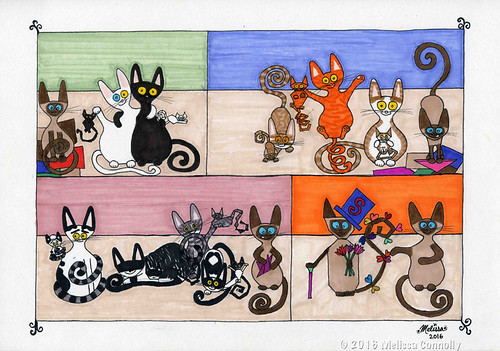
Origami
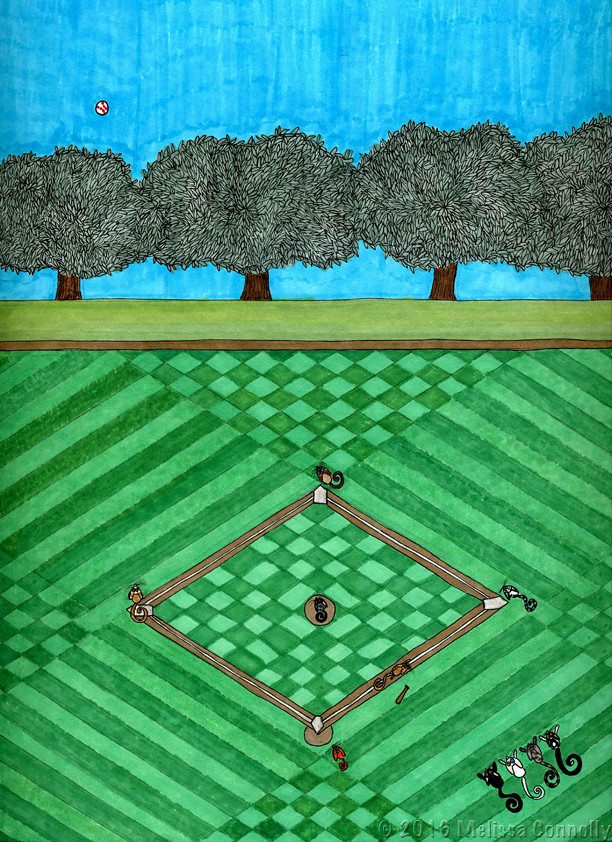
I was so sad to hear about Gene Wilder last night after I finished this drawing. This Illustration Friday topic is a couple of weeks old, but the Kitties have been hard at work on their creations all this time. Look at how Simon was inspired by Willy Wonka without even realizing it – a sure sign that Gene Wilder will always be with us.

Monday, August 22, 2016
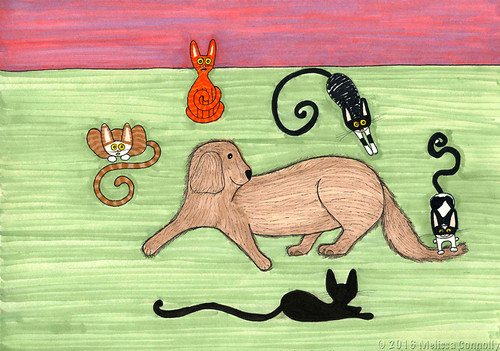
Tiny!
All kitties start off as tiny fuzzballs, even these ones.
 |
| (Illustration Friday: August 5, 2016) |
Tuesday, August 09, 2016
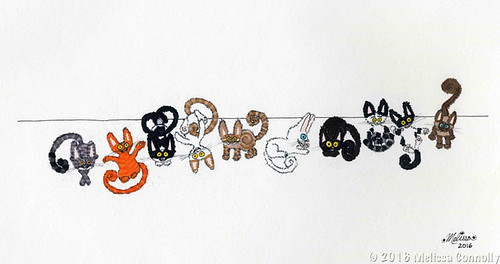
Trapped!
Polly is often surrounded by the Kitties, but only one of them has the guts to trap her.
 |
| (Illustration Friday: July 22, 2016) |
Sunday, August 07, 2016
Make 'Em Laugh: Short-Term Memories of Longtime Friends
Hi everyone,
 In between, she weighs in on some fellow comedians of her time, like Jack Benny, Milton Berle, and Phyllis Diller. She recalls getting the royal treatment from various princes around the world as well as being seated next to Prince at the Oscars in 1985 (when he won one). Of course, she also weaves some great Hollywood tales.
One time, she packing a rowdy bus full of Hollywood's own royalty, including Lauren Bacall and Humphrey Bogart, David Niven, Gary Cooper, Dean Martin and Jerry Lewis, Jimmy Stewart, Sammy Davis, Jr., and Donald O"Connor, to attend a Judy Garland concert. On The Tonight Show, instead of answering Jack Paar's unwanted question about her love life, she attacked him, pulled him under his desk, and tossed various articles of his clothing over the top as the audience roared. Another time, she demonstrated what Girl Scouts learn about fire safety by toppling on to guest Regis Philbin and rolling him around on the floor. While emceeing an event, she spontaneously jumped into the pool in front of her – ruining her handmade evening gown – just to liven up the party. It's true, Debbie Reynolds will do almost anything for a laugh.

 |
| Debbie Reynolds with Gene Kelly in Singin' in the Rain |
Last Christmas, my sister surprised me with the book, Make 'Em Laugh: Short-Term Memories of Longtime Friends by Debbie Reynolds and Dorian Hannaway. Debbie Reynolds is probably best known for two things, costarring in the 1952 classic musical Singin' in the Rain and being the mother of Carrie Fisher (a.k.a. Princess Leia). I love her for both reasons, though I've never followed her career. In fact, I think Singin' in the Rain might be the only movie of hers that I've seen in full! Am I forgiven since I've seen Singin' in the Rain at least 785 times, know it by heart, and will keep on watching it? (That's what happens when you grow up as a fan of Gene Kelly.)
I know of Debbie Reynolds more from her daughter, who famously alluded to their relationship through the mother and daughter characters in her book (and film adaptation of) Postcards from the Edge. She also spoke of her mother's lovable quirks in her one-woman show Wishful Drinking.
I know of Debbie Reynolds more from her daughter, who famously alluded to their relationship through the mother and daughter characters in her book (and film adaptation of) Postcards from the Edge. She also spoke of her mother's lovable quirks in her one-woman show Wishful Drinking.
I was a little disappointed that, in this book, Debbie Reynolds doesn't discuss Gene Kelly or Singin' in the Rain – which showcases her first major film role as ingenue Kathy Selden. I'm sure she's already done that in her other books and is probably tired of talking about it by now. On the other hand, I loved reading about someone I knew so little about from the start.
A bigger fan might get more out of this book, as I breezed past talk of her films that I didn't recognize. That didn't happen often, however, since this book focuses more on her personal experiences with short stories about her many adventures and friends. Though not told in any particular order, her stories range from first getting noticed after winning Miss Burbank at age 16 to receiving a lifetime achievement award from the Screen Actor's Guild at age 82.
 In between, she weighs in on some fellow comedians of her time, like Jack Benny, Milton Berle, and Phyllis Diller. She recalls getting the royal treatment from various princes around the world as well as being seated next to Prince at the Oscars in 1985 (when he won one). Of course, she also weaves some great Hollywood tales.
One time, she packing a rowdy bus full of Hollywood's own royalty, including Lauren Bacall and Humphrey Bogart, David Niven, Gary Cooper, Dean Martin and Jerry Lewis, Jimmy Stewart, Sammy Davis, Jr., and Donald O"Connor, to attend a Judy Garland concert. On The Tonight Show, instead of answering Jack Paar's unwanted question about her love life, she attacked him, pulled him under his desk, and tossed various articles of his clothing over the top as the audience roared. Another time, she demonstrated what Girl Scouts learn about fire safety by toppling on to guest Regis Philbin and rolling him around on the floor. While emceeing an event, she spontaneously jumped into the pool in front of her – ruining her handmade evening gown – just to liven up the party. It's true, Debbie Reynolds will do almost anything for a laugh.
Because I've always watched classic movies, I recognized most of the Golden Age film stars and entertainers mentioned in this book. I loved reading about her relationships with Bette Davis, Katherine Hepburn, Lana Turner, and Elizabeth Taylor. I appreciated, though, how she helped put things into context for other readers who may be unfamiliar with all the names she drops. For example, she compared the Gabor sisters to the Kardashians and suggested checking out George Burns and Gracie Allen's TV shows on YouTube.
Most of all, I love that the voice and personality of Debbie Reynolds comes through in this book loud and clear. Maybe I have seen Singin' in the Rain too many times, but I can hear her on these pages. True to the title, she made me laugh out loud at times. After expressing her shock about receiving brash commentary on her chest from some Hollywood heavyweights, she reflects, "I guess it's flattering to have had Groucho Marx and others admire me that way, because now I live in Beverly Hills and my boobs are in San Diego." Speaking of her parents, she quips, "My parents were happily married for 57 years. They didn't speak for 42 of them, but that's all right."
Make 'Em Laugh is a light, quick read. Even if you're not a fan, Debbie Reynolds will keep you entertained with her vivacious personality, admirable perseverance, and infectious enthusiasm. Give this book a try and it might warm your heart too.
Best,
Wednesday, July 20, 2016
Sunday, July 17, 2016
Vintage
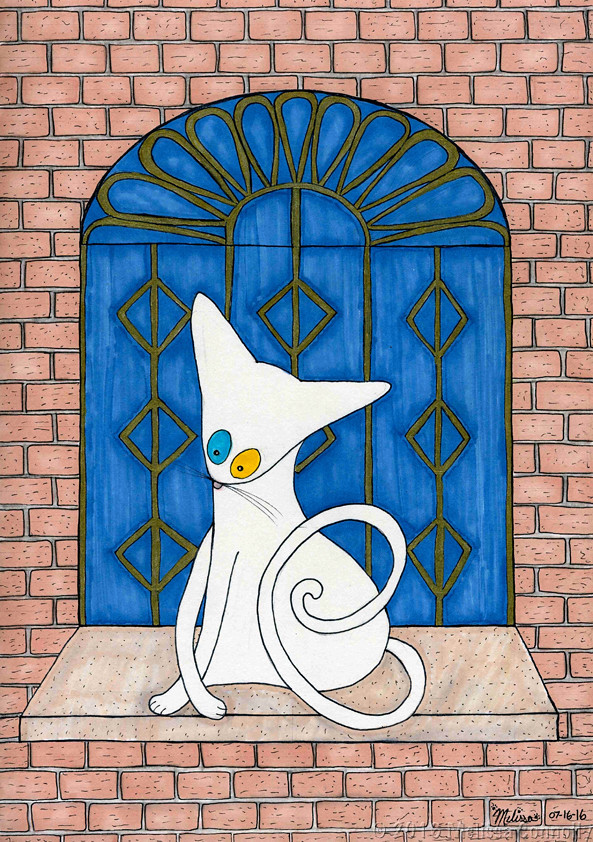
This drawing started as an homage to Al Hirschfeld after I watched a great documentary about him called The Line King last weekend. (Netflix has it, if you're interested.) But my cat caricature didn't cut it, so I added some Art Deco elements because I had also recently found an old A&E Biography of Carole Lombard, one of my favorite ladies from the 1930s.
In the end, this drawing really pays tribute to The Mother Kitty. When she'd had enough messing around outside, she'd jump up to the high window sill at the front of our house and stare at us. It was her subtle way of saying, "HEY! WHERE ARE YOU? LET ME IN!"
In the end, this drawing really pays tribute to The Mother Kitty. When she'd had enough messing around outside, she'd jump up to the high window sill at the front of our house and stare at us. It was her subtle way of saying, "HEY! WHERE ARE YOU? LET ME IN!"
 |
| (Illustration Friday: June 24, 2016) |
Monday, July 11, 2016
The French Lieutenant's Woman
Hi everyone,
 Written in 1969, the story takes place in the mid-19th century in Lyme Regis, England. Walking along the coast, Charles Smithson and his fiance Ernestina Freeman encounter a mysterious woman staring toward the sea by the cliffside. Ernestina tells Charles what she's heard about her: Her name is Sarah Woodruff. She was a governess who helped nurse a wounded French lieutenant back to health. They had a an affair but he left town, and she is still waiting for his return. Ms. Woodruff has lived with a scandalous reputation ever since and relies on the charity of others who will give her a place to stay and work to do. According to Ernestina, it's best to stay away from this outcast.
This book felt long to me (probably because I sometimes took long breaks between chapters), but the writing is impressive and intricate. The lengthy descriptions, detail, and explanations all serve a purpose, catapulting readers into the era and environment with fully developed characters. I could picture and hear all of them in my head because of the way the author described their appearance, gestures, attitudes, and speaking patterns.
The peripheral characters and their stories were more interesting to me than Charles's problems. After Charles's servant Sam begins courting Ernestina's servant Mary, for example, his own ambitions and frustrations come to light as he aims for a life beyond his current status. Charles's ignorance of Sam's needs reveal the faults of his character and the class system. Similarly, Sarah deals with Mrs. Poulteney, a mean, judgmental old woman who takes her in only to build up her lacking number of good deeds.
Best,
The French Lieutenant's Woman by John Fowles is one of my dad's favorite books. He gave me a hard-cover copy once that I've been carrying around with me for years. I have tried to read it several times but typically ran out of steam by page 5 because I couldn't follow the long sentences and was too lazy to look up the words I didn't understand. This time around, I picked it from my pile – determined to push past page 5 – and I actually enjoyed this book.
 Written in 1969, the story takes place in the mid-19th century in Lyme Regis, England. Walking along the coast, Charles Smithson and his fiance Ernestina Freeman encounter a mysterious woman staring toward the sea by the cliffside. Ernestina tells Charles what she's heard about her: Her name is Sarah Woodruff. She was a governess who helped nurse a wounded French lieutenant back to health. They had a an affair but he left town, and she is still waiting for his return. Ms. Woodruff has lived with a scandalous reputation ever since and relies on the charity of others who will give her a place to stay and work to do. According to Ernestina, it's best to stay away from this outcast.
But, of course, Charles does not. Intrigued, he walks up to her, cautioning her away from the cliff's edge. This small gesture of kindness gets Sarah's attention, and eventually, she asks to meet with him in secret. She longs to share her story with someone who has an empathetic ear. As these meetings progress, their connection becomes undeniable for Charles. He becomes so obsessed with Sarah that it throws his life into full disarray, scandal, and uncertainty.
The French Lieutenant's Woman has many ambitious unique features. The author is present throughout the story. He injects his thoughts about the writing of it and its characters, describes scenes or locations, and explains points in characters' conversations. This novel has footnotes, some of which take up half of a page. It also has related excerpts from other books at the start of each chapter. The author even becomes an actual character in the story during two of the three endings he offers.
While these elements are inventive and refreshing, I found some of it hard to follow, which made me lose interest. I just wanted to get on with the story rather than learn the history of something a character casually mentions or find out the types of foliage that grows best in certain areas of town. I also didn't like having three endings from which to choose, the last of which seemed most unresolved. However, I'm sure these features are what make this book the classic, best-selling, award-winning piece of literature it is.
While these elements are inventive and refreshing, I found some of it hard to follow, which made me lose interest. I just wanted to get on with the story rather than learn the history of something a character casually mentions or find out the types of foliage that grows best in certain areas of town. I also didn't like having three endings from which to choose, the last of which seemed most unresolved. However, I'm sure these features are what make this book the classic, best-selling, award-winning piece of literature it is.
This book felt long to me (probably because I sometimes took long breaks between chapters), but the writing is impressive and intricate. The lengthy descriptions, detail, and explanations all serve a purpose, catapulting readers into the era and environment with fully developed characters. I could picture and hear all of them in my head because of the way the author described their appearance, gestures, attitudes, and speaking patterns.
The peripheral characters and their stories were more interesting to me than Charles's problems. After Charles's servant Sam begins courting Ernestina's servant Mary, for example, his own ambitions and frustrations come to light as he aims for a life beyond his current status. Charles's ignorance of Sam's needs reveal the faults of his character and the class system. Similarly, Sarah deals with Mrs. Poulteney, a mean, judgmental old woman who takes her in only to build up her lacking number of good deeds.
Finishing this book was an accomplishment, and I feel enriched by it. Since it was a struggle for me to read at times, though; I wasn't sure if I should recommend it to others....until I saw the movie version.
 I rented the 1981 Oscar-nominated film adaptation, starring Meryl Streep as Sarah and Jeremy Irons as Charles, thinking it would help clear up any lingering confusion I had. On the contrary, director Karel Reisz seemed to take a cue from John Fowles and introduced multiple story lines. In addition to playing the characters of Sarah and Charles, Meryl Streep and Jeremy Irons also played modern-day film actors and secret lovers. In this parallel story, they were adapting, researching, rehearsing, and filming The French Lieutenant's Woman, playing Sarah and Charles while their own personal relationship was similar to their characters' circumstances.
With its unique take on this story, the film version of The French Lieutenant's Woman is good on its own terms. More than anything, though, it made me appreciate the novel – with its immersive world and colorful characters – so much more. I watched it thinking of all things the director had to gloss over and missed those details. As usual, the book is better, so give it a try (past page 5). Better yet, test them both out as I did, and let me know what you think.
 I rented the 1981 Oscar-nominated film adaptation, starring Meryl Streep as Sarah and Jeremy Irons as Charles, thinking it would help clear up any lingering confusion I had. On the contrary, director Karel Reisz seemed to take a cue from John Fowles and introduced multiple story lines. In addition to playing the characters of Sarah and Charles, Meryl Streep and Jeremy Irons also played modern-day film actors and secret lovers. In this parallel story, they were adapting, researching, rehearsing, and filming The French Lieutenant's Woman, playing Sarah and Charles while their own personal relationship was similar to their characters' circumstances.
With its unique take on this story, the film version of The French Lieutenant's Woman is good on its own terms. More than anything, though, it made me appreciate the novel – with its immersive world and colorful characters – so much more. I watched it thinking of all things the director had to gloss over and missed those details. As usual, the book is better, so give it a try (past page 5). Better yet, test them both out as I did, and let me know what you think.
Best,
Wednesday, July 06, 2016
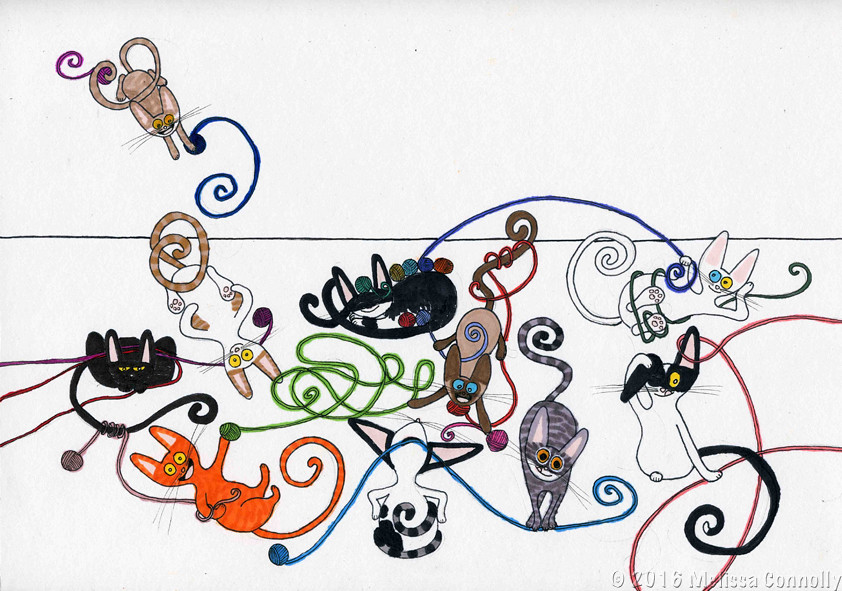
Yarn
The Kitties refuse to believe me when I tell them that yarn is not a toy. You try to tell them to stop playing with it!
 |
| (Illustration Friday: June 17, 2016) |
Saturday, June 18, 2016
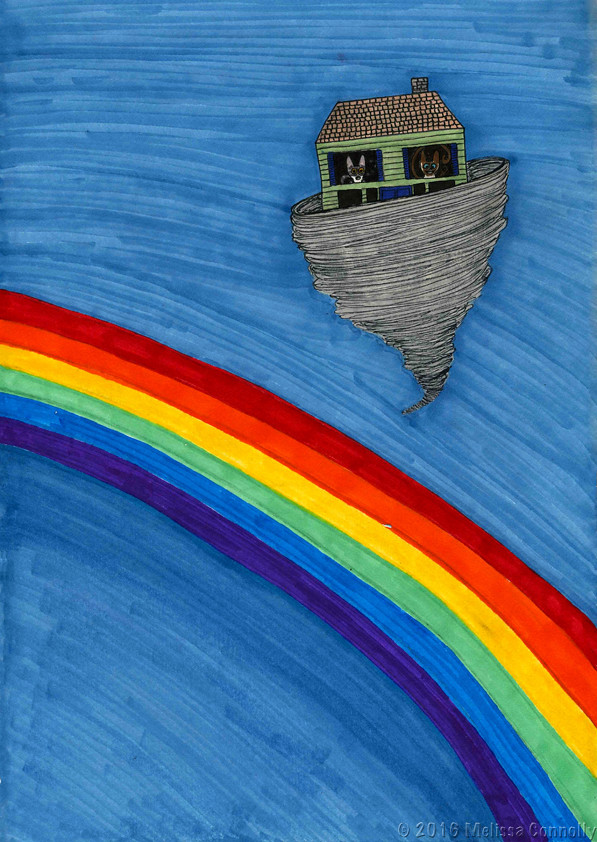
Tornado
I tried to assure Lily that Dorothy claims this mode of travel to be perfectly safe. She only warned, "Watch the landing." I may have been unsuccessful in calming Lily's nerves, but as usual, Simon is happy to be along for the ride.
 |
| (Illustration Friday: June 10, 2016) |
Wednesday, June 15, 2016
Monday, June 13, 2016
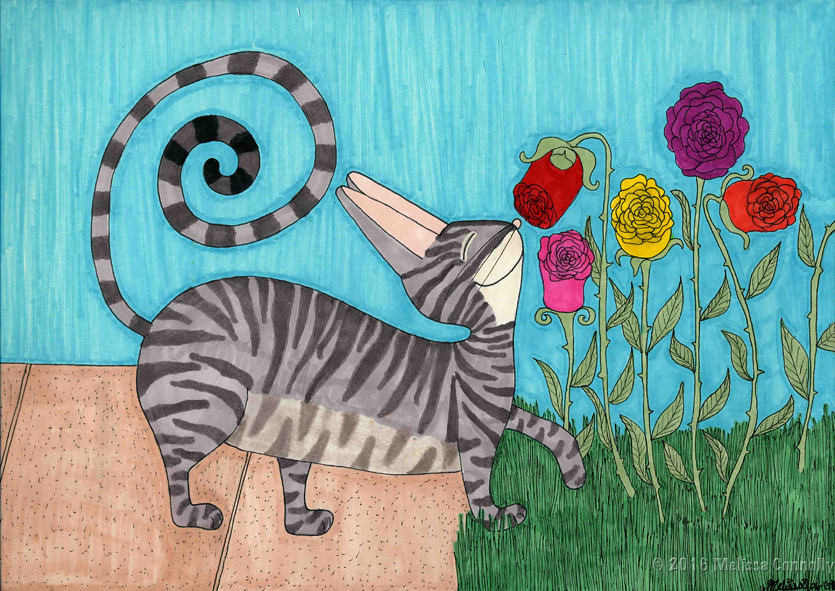
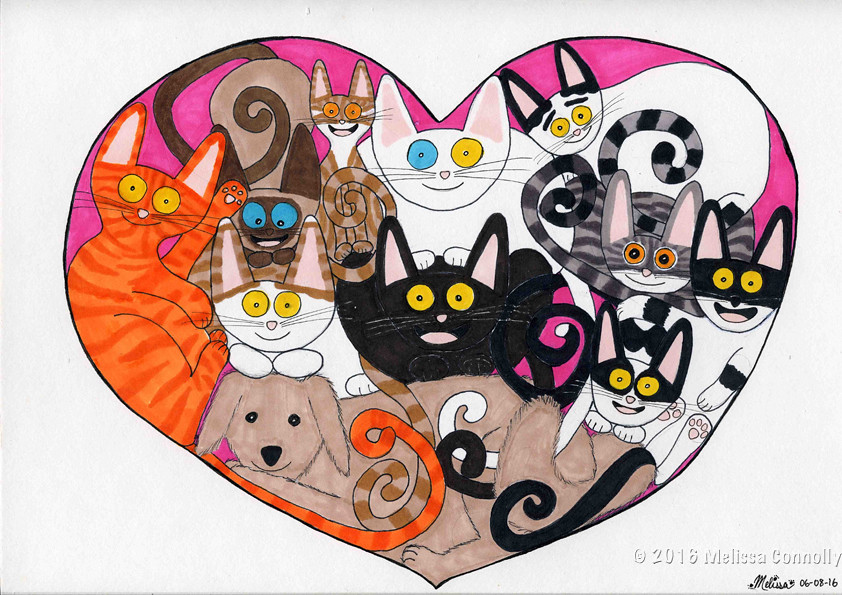
Tribe
The Melissa's Kitties Tribe takes all kinds and includes one honorary member, Polly, who at least acts like a cat sometimes.
Stay strong, Orlando! We are all with you, sending love....
Stay strong, Orlando! We are all with you, sending love....
 |
| (May 27, 2016) |
Friday, June 10, 2016
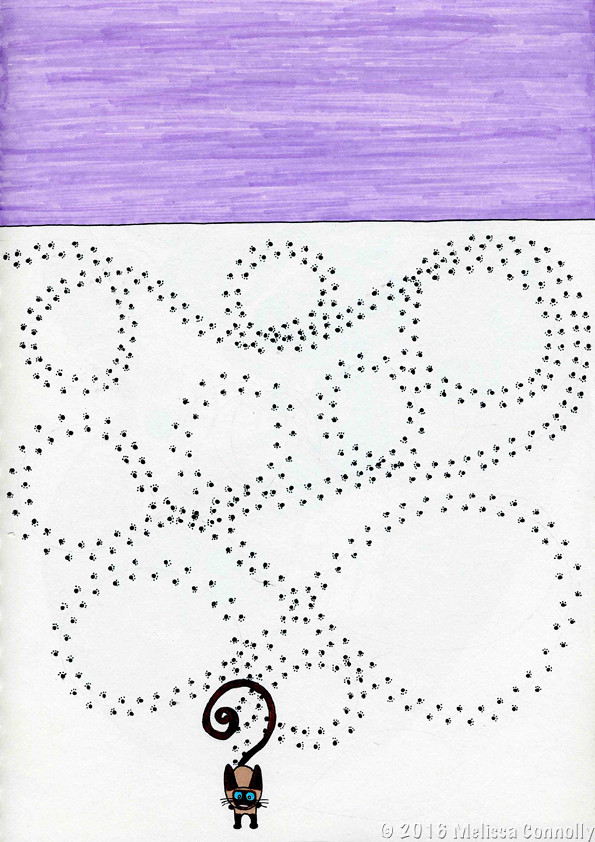
Wheels
Of all The Kitties, everyone knows that Simon is the King of Wheels.
 |
| (Illustration Friday: May 20, 2016) |
Wednesday, June 08, 2016
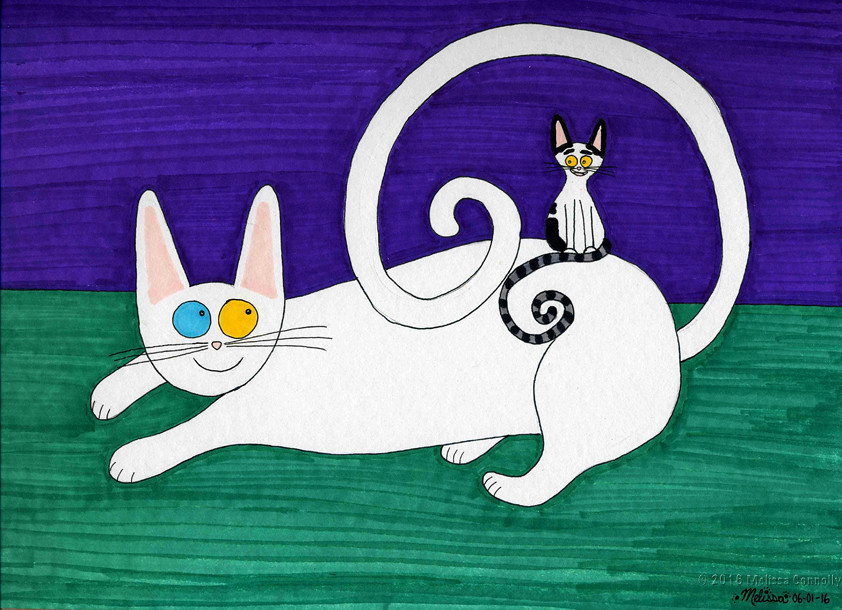
Nostalgia
I can't remember exactly when I started drawing The Kitties, but The Mother Kitty and Gordon were my first inspirations back in the '80s. We've come a long way since then!
 |
| (Illustration Friday: May 13, 2016) |
Monday, June 06, 2016
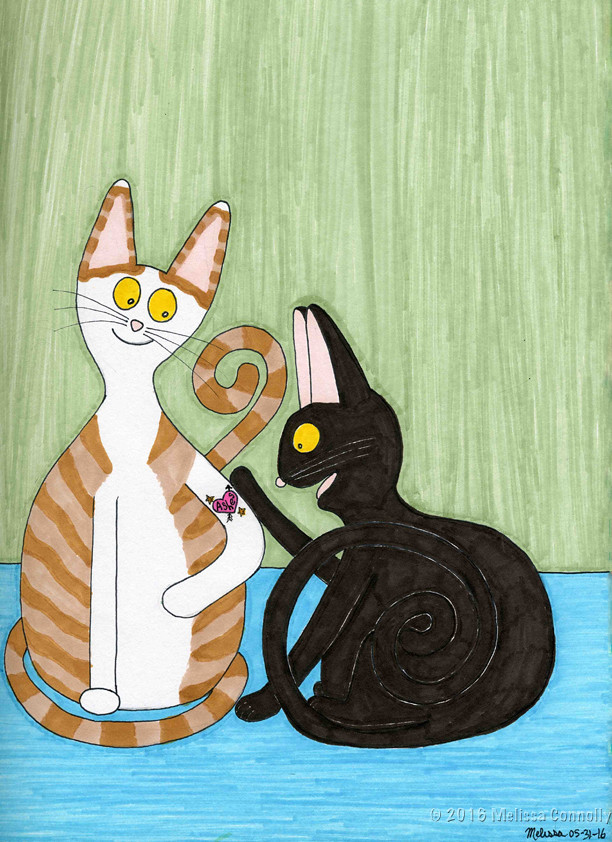
Tattoo
When Ashes first moved into Comet's house, he was more than skeptical. But he came around quickly because no one can resist her charms or deny true love.
 |
| (Illustration Friday: May 6. 2016) |
Thursday, June 02, 2016
Tuesday, May 31, 2016
Ashes (1997-2016)
Hi everyone,

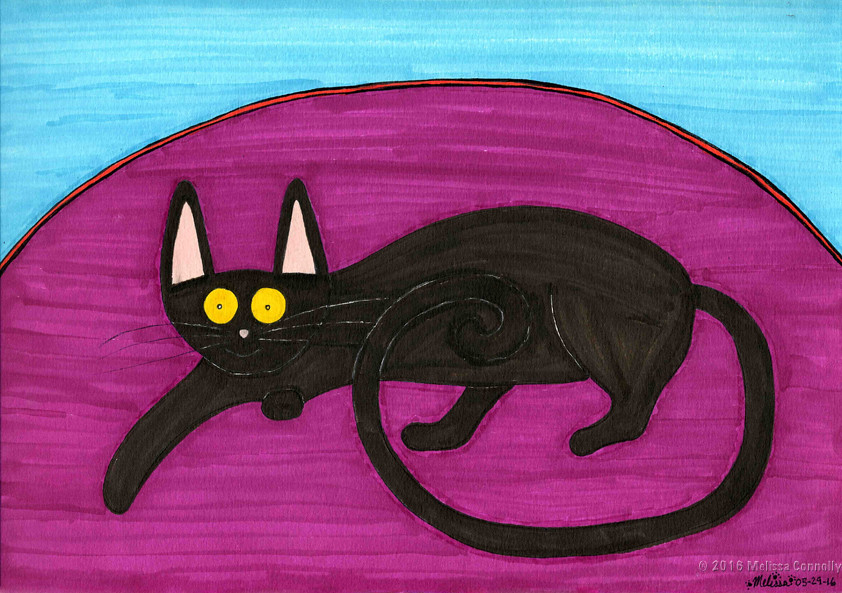
Let's celebrate Ashes, the grande dame of the Connolly household in Columbus, Ohio, who passed away earlier this month.

Comet's longtime companion was a great old cat, who always voiced her opinion and got away with whatever she wanted.
Greatly missed, Ashes will always still live here at Melissa's Kitties.
Saturday, May 28, 2016
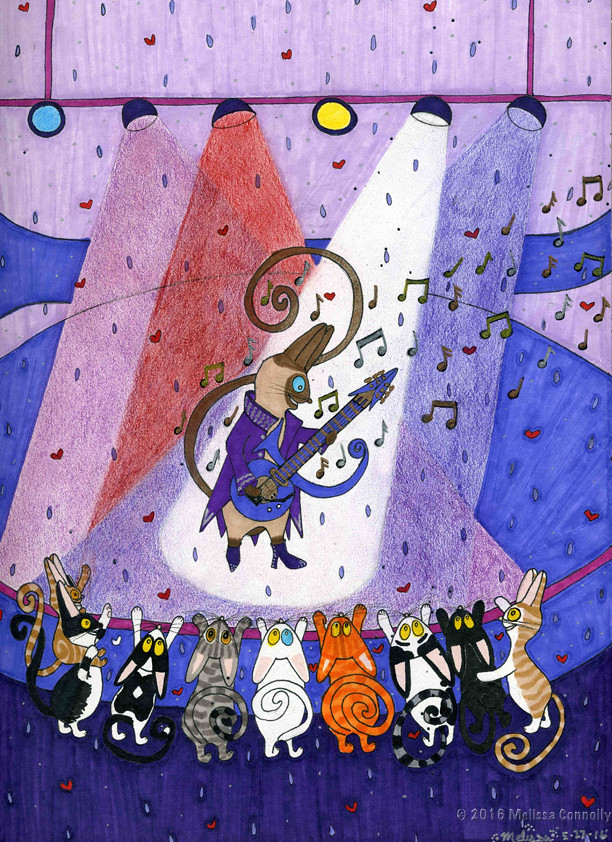
Prince
Like no one else, Prince made me dance. I first saw him on MTV, of course, where his music videos played on regular rotation. Then, when his movie Purple Rain came out in '84, with that amazing Oscar-winning soundtrack, he was everywhere and everything.
 I always loved Prince's air of mystery, which happily seems true – that he built and lived in his own Paisley Park in Minnesota rather than New York or L.A., that he spoke in one-liners or had others speak for him, and that he popped up unannounced with surprise performances for a lucky few in the wee hours of the night.
Prince has a sound, style, and coolness that will always only be his. Who else can pull off those outfits and heels, let alone dance in them the way he did? Who else can pick out a color and own it? We're so lucky that he shared his purple world with us.
"Let's Go Crazy" Prince and the Revolution (1985)
Prince was a consummate musician. Whenever he played his guitar, I was transfixed. He was an explosive performer who demanded our attention without having to ask for it.
 I always loved Prince's air of mystery, which happily seems true – that he built and lived in his own Paisley Park in Minnesota rather than New York or L.A., that he spoke in one-liners or had others speak for him, and that he popped up unannounced with surprise performances for a lucky few in the wee hours of the night.
 Prince has a sound, style, and coolness that will always only be his. Who else can pull off those outfits and heels, let alone dance in them the way he did? Who else can pick out a color and own it? We're so lucky that he shared his purple world with us.
I think President Obama put it best: Few artists have influenced the sound and trajectory of popular music more distinctly, or touched quite so many people with their talent. As one of the most gifted and prolific musicians of our time, Prince did it all – Funk, R&B, Rock and Roll. He was a virtuoso instrumentalist, a brilliant bandleader, and an electrifying performer. "A strong spirit transcends rules," Prince once said – and nobody's spirit was stronger, bolder, or more creative.
May his purple reign live on....
 |
| (Illustration Friday: April 22, 2016) |
Friday, May 13, 2016
Wood
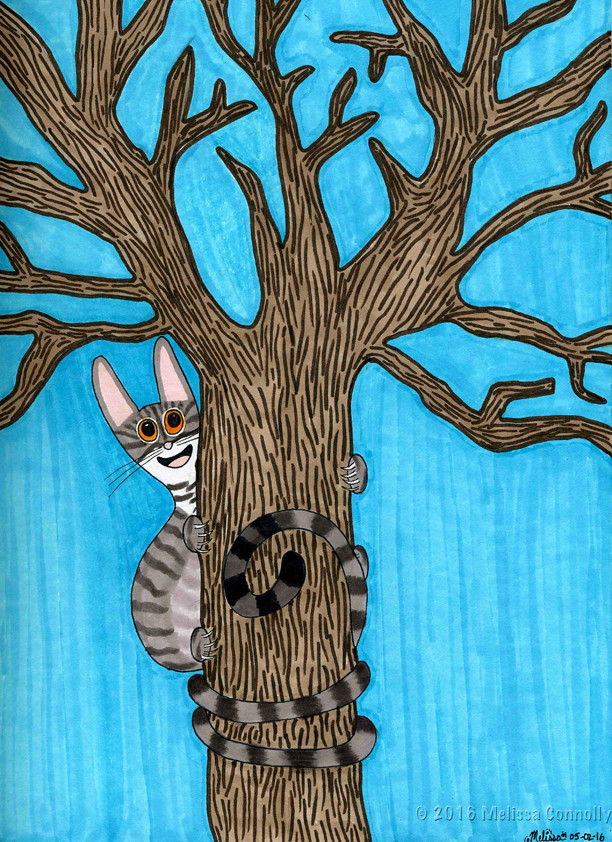
Lately, I've been thinking about how Lily's world is the confines of my small apartment. Who knows what happened during the first seven months of her life, but since then, she's only rarely stepped out of our front door into the main hallway.
Sometimes, I wonder if she'd like to move into a more spacious place with more windows and scenery. Or, maybe she'd like to sharpen her claws on a giant tree instead of my furniture. When I suggest these things to her, though, she just stares at me and licks her foot.
Sometimes, I wonder if she'd like to move into a more spacious place with more windows and scenery. Or, maybe she'd like to sharpen her claws on a giant tree instead of my furniture. When I suggest these things to her, though, she just stares at me and licks her foot.
 |
| (Illustration Friday: April 15, 2016) |
Monday, May 09, 2016

Saturday, April 23, 2016
Unfaithful Music & Disappearing Ink
Hi everyone,
When I saw last year that Elvis Costello was on a book tour in support his new memoir Unfaithful Music & Disappearing Ink, I bought my ticket for his D.C. stop immediately. I can't claim to be his biggest fan, but I love some of his music, and I always find him entertaining. Elvis Costello first got my attention in 1989 when he released Spike, an album that includes some songs co-written with Paul McCartney. One of its singles, "Veronica," became a big hit on the radio and MTV, which I thought was impressive considering it's a happy tune about someone with Alzheimer's disease. My other favorite song on Spike is called "Tramp the Dirt Down," an unfriendly commentary on Margaret Thatcher. I guess I was that kind of kid.
 I saw Elvis Costello perform a live set once in person, when he opened for Sting, but I mostly catch him randomly on TV. I remember when he showed up on "Frasier" in the '90s, playing a musician who just got hired to perform daily at Cafe Nervosa, ruining the Crane Brothers' peaceful coffee-shop hangout. And, I tuned in that night in 2003 when he filled in for David Letterman as host of "The Late Show." (Why do I remember these things?) Also, over the years, Elvis Costello showed up on Comedy Central's "The Colbert Report," always game to do something fun.
My favorite thing that Elvis Costello has ever done, though, is "Spectacle," a music-filled talk show, which he hosted. He interviewed musicians and other famous faces about music and performed related songs with his guests. The show aired from 2008 to 2010, but I didn't see it until last year when I finally got around to renting the DVDs through Netflix. Elvis Costello is so knowledgeable about music, having played with so many different musicians of different genres. Through this show, I learned about artists I love as well as ones I'd never heard of before. This show was a perfect combination of friendly, informative conversation and wonderful performances in a relaxed setting in front of a small audience. It should still be on the air and required viewing in schools!
But I'll get off that soapbox and sum up my admiration for Elvis Costello by saying this: with his fantastic songwriting abilities already established – Listen to "Alison," "Beyond Belief," "God Give Me Strength" or the rowdier "Pump It Up" and "Oliver's Army," just to name a few. – Elvis Costello always tells interesting stories, whether he's singing or talking. So, I had a good feeling about him writing a book. When I picked this book up at Sixth & I Synagogue last October and realized that it was 672 pages, I may have questioned my logic a bit, but I still kept the faith.
 Before the author even appeared on stage, I noticed that Unfaithful Music & Disappearing Ink includes no index, and the photos are sprinkled throughout the text without any captions. The first thing Elvis Costello said to us about the book was that we might notice it includes no index and the photos aren't captioned or stuck in the middle on a cluster of special paper. He explained, "I'm telling a story. If you read the book, you'll know who that person is in the picture." I couldn't wait to get started.
This book is great! It reads really fast because, as we know, Elvis Costello weaves good tales. It was an interesting read because, since I'm not overly familiar with his vast body of work, I rolled right past the specific details and lyrics about various unfamiliar songs that I'm sure his superfans would study more fiercely. After reading the book, I learned that a companion CD exists, which probably includes many of the songs the author refers to in his story. I wish I had known about this helpful resource while I was reading.
I favored learning about Declan MacManus before he became Elvis Costello – the boy who went to work with his dad (Ross MacManus, a popular singer and musician in his own day), hanging around in the back rows of dance halls, watching him and the other musicians rehearse, fostering his growing love for music. This book covers a good amount of family history with wonderful details about his grand and great-grand relatives as well as his own upbringing. It was exciting to following his determined move from office jobs to rock-and-roller. Feeling the passion and drive he had to share his craft is inspiring.
I've known about Elvis Costello's rise on the new wave/punk music scene and his early reputation as an angry young man, but the one I've come to know better is the Elvis Costello of now – the proper British gentleman, who always wears a suit and hat and is quick to joke, explain music history, and play with varied musicians, like Emmylou Harris and Mavis Staples. For me, his exploits with his old bandmates, The Attractions, at the height of their fame are more side notes to the richer life he's led, learning and honing his musicianship – always moving forward to the next thing, sticking by his family, and eventually finding his own personal contentment.
In the book's acknowledgements, Elvis Costello thanks his wife, jazz musician Diana Krall, for making him take the time to write everything down for this memoir so that he and the family will have it. That's what this book reads like: a personal keepsake for future generations of the MacManus Clan to remember not only his extraordinary life, but also the lives of those distant working-class relatives who have already passed. The old black-and-white photos complement this effort, capturing the author at all ages as well as relatives, friends, scribbled song lyrics, and other mementos.
Unlike a typical memoir, this one is not a chronological life story. It's more like a box of memories. Chapters about Elvis Costello's parents and grandparents run alongside chapters about working with Paul McCartney, T Bone Burnett, Burt Bacharach, and Allen Toussaint. Within those, he recalls his encounters with Bob Dylan, David Bowie, Johnny Cash, Joe Strummer, and even classic film director Frank Capra. You never know who or what he'll run into on the next page. Elvis Costello will keep you reading to find out.
 I saw Elvis Costello perform a live set once in person, when he opened for Sting, but I mostly catch him randomly on TV. I remember when he showed up on "Frasier" in the '90s, playing a musician who just got hired to perform daily at Cafe Nervosa, ruining the Crane Brothers' peaceful coffee-shop hangout. And, I tuned in that night in 2003 when he filled in for David Letterman as host of "The Late Show." (Why do I remember these things?) Also, over the years, Elvis Costello showed up on Comedy Central's "The Colbert Report," always game to do something fun.
My favorite thing that Elvis Costello has ever done, though, is "Spectacle," a music-filled talk show, which he hosted. He interviewed musicians and other famous faces about music and performed related songs with his guests. The show aired from 2008 to 2010, but I didn't see it until last year when I finally got around to renting the DVDs through Netflix. Elvis Costello is so knowledgeable about music, having played with so many different musicians of different genres. Through this show, I learned about artists I love as well as ones I'd never heard of before. This show was a perfect combination of friendly, informative conversation and wonderful performances in a relaxed setting in front of a small audience. It should still be on the air and required viewing in schools!
But I'll get off that soapbox and sum up my admiration for Elvis Costello by saying this: with his fantastic songwriting abilities already established – Listen to "Alison," "Beyond Belief," "God Give Me Strength" or the rowdier "Pump It Up" and "Oliver's Army," just to name a few. – Elvis Costello always tells interesting stories, whether he's singing or talking. So, I had a good feeling about him writing a book. When I picked this book up at Sixth & I Synagogue last October and realized that it was 672 pages, I may have questioned my logic a bit, but I still kept the faith.

This book is great! It reads really fast because, as we know, Elvis Costello weaves good tales. It was an interesting read because, since I'm not overly familiar with his vast body of work, I rolled right past the specific details and lyrics about various unfamiliar songs that I'm sure his superfans would study more fiercely. After reading the book, I learned that a companion CD exists, which probably includes many of the songs the author refers to in his story. I wish I had known about this helpful resource while I was reading.
I favored learning about Declan MacManus before he became Elvis Costello – the boy who went to work with his dad (Ross MacManus, a popular singer and musician in his own day), hanging around in the back rows of dance halls, watching him and the other musicians rehearse, fostering his growing love for music. This book covers a good amount of family history with wonderful details about his grand and great-grand relatives as well as his own upbringing. It was exciting to following his determined move from office jobs to rock-and-roller. Feeling the passion and drive he had to share his craft is inspiring.
I've known about Elvis Costello's rise on the new wave/punk music scene and his early reputation as an angry young man, but the one I've come to know better is the Elvis Costello of now – the proper British gentleman, who always wears a suit and hat and is quick to joke, explain music history, and play with varied musicians, like Emmylou Harris and Mavis Staples. For me, his exploits with his old bandmates, The Attractions, at the height of their fame are more side notes to the richer life he's led, learning and honing his musicianship – always moving forward to the next thing, sticking by his family, and eventually finding his own personal contentment.
In the book's acknowledgements, Elvis Costello thanks his wife, jazz musician Diana Krall, for making him take the time to write everything down for this memoir so that he and the family will have it. That's what this book reads like: a personal keepsake for future generations of the MacManus Clan to remember not only his extraordinary life, but also the lives of those distant working-class relatives who have already passed. The old black-and-white photos complement this effort, capturing the author at all ages as well as relatives, friends, scribbled song lyrics, and other mementos.
Unlike a typical memoir, this one is not a chronological life story. It's more like a box of memories. Chapters about Elvis Costello's parents and grandparents run alongside chapters about working with Paul McCartney, T Bone Burnett, Burt Bacharach, and Allen Toussaint. Within those, he recalls his encounters with Bob Dylan, David Bowie, Johnny Cash, Joe Strummer, and even classic film director Frank Capra. You never know who or what he'll run into on the next page. Elvis Costello will keep you reading to find out.
Subscribe to:
Posts (Atom)